Companies with the best and the worst fundamentals.
Lists of companies in NSE500 with the best and the worst fundamentals...
Lists of companies in NSE500 with the best and the worst fundamentals...
List of the latest important filings for NSE500....
Lists of companies in NSE500 with the best and the worst technicals...
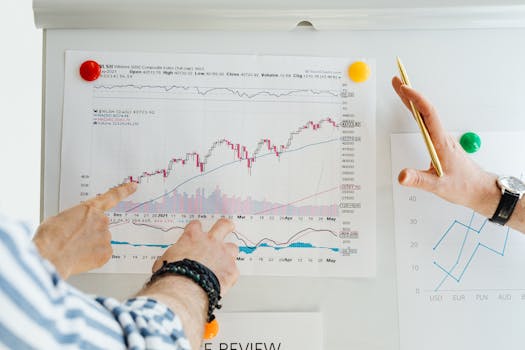
An analysis of how the BSE index reconstitution and a shift in...

An analysis of the Federal Reserve's December 2025 'hawkish' rate cut and...

Investor enthusiasm for AI stocks cooled in late 2025 as healthcare and...


The final trading days of 2025 have arrived, bringing with them the annual anticipation of the "Santa Claus rally." This historical pattern, which has seen the S&P 500 rise an average of 1.3% in the last five days of December and the first two of January, is more than a seasonal curiosity this year. It serves as a critical litmus test for investor confidence after a year defined by extreme volatility, shifting global leadership, and a intense focus on artificial intelligence. The market's performance in this brief window is revealing underlying currents that will shape the investment landscape heading into 2026.
To understand the context of this year's Santa Rally, one must first appreciate the remarkable resilience global markets displayed in 2025. The year was bookended by significant shocks: a challenge to U.S. AI supremacy from China's DeepSeek in January and a sweeping tariff announcement from the Trump administration in April that briefly wiped trillions from global market value. Despite this, the S&P 500 is on track for a solid gain of approximately 14-16%, marking a third consecutive year of double-digit returns. However, this headline figure masks a profound story of global rotation and concentrated risk.
For the first time since 2017, the U.S. market has underperformed its international peers during a broad market advance. Japan's Nikkei 225 led major indices with a 24% return, followed by the UK's FTSE 100 at 20%, and Europe's Stoxx 50 at 17%. This shift reflects what analysts have termed a move away from "U.S. exceptionalism," driven by a weakening U.S. dollar, policy uncertainty stateside, and attractive valuations abroad. Within the U.S., gains were extraordinarily narrow. At its peak, the technology sector's weighting in the S&P 500 breached 36%, surpassing its dot-com bubble high, with just a handful of megacap stocks accounting for nearly half of the benchmark's annual return.
The volatility landscape in 2025 redefined expectations. The Cboe Volatility Index (VIX) spiked above 50 in April during the tariff announcement a level not seen since the pandemic only to collapse back below 20 within weeks. This pattern of violent spikes followed by rapid decompression occurred several times, a phenomenon rarely seen before 2011 but now becoming a hallmark of the current market structure.
This new regime of "fast volatility" is supported by the booming options market, where record trading volumes provide both hedging and speculative leverage. The dynamic creates a feedback loop: sharp sell-offs are met with aggressive buying of call options (bets on rising prices), particularly in tech and AI-related names, which in turn helps stabilize and propel the market higher. This behavior indicates a deep-seated investor mentality where dips are not seen as the start of a bear market but as temporary buying opportunities, a conviction that has been richly rewarded throughout the year.
As the year draws to a close, a crucial tension defines the sectoral outlook. On one side stands the still-dominant AI and technology trade. Despite recent jitters over the sustainability of massive capital expenditures with big tech projected to spend over $400 billion on AI infrastructure the fundamental earnings story remains robust. Third-quarter earnings for the "Magnificent Seven" tech giants were impressive, with consensus growth expectations for 2025 rising above 22%.
On the other side, there are clear signs of a long-awaited broadening. In recent weeks, economically sensitive sectors like industrials, real estate, and financials have shown strong buy signals, while small-cap stocks and transportation have picked up the slack in December as tech has wavered. This rotation suggests some investors are preparing for a market where leadership diversifies beyond a few technology behemoths. Notably, this divide is geographic: Europe's rally in 2025 was led by banks and value stocks, while the U.S. was powered by tech growth, creating the widest dislocation in market leadership between the two regions on record.
Monetary policy has been a key pillar of market confidence, but its support is evolving. The Federal Reserve cut interest rates three times in 2025, responding to a labor market showing signs of softening, with unemployment reaching 4.6%. However, the path for 2026 is marked by caution. The Fed has signaled a potential pause, concerned about persistent inflationary pressures from earlier tariffs and resilient parts of the economy. This creates uncertainty for a market that has grown accustomed to a supportive rate environment.
Globally, central banks are on divergent paths. The European Central Bank has been more aggressively easing, while the Bank of Japan is slowly tightening policy, creating complex cross-currents for global capital flows. This policy divergence underscores a world where a one-size-fits-all macro narrative is disappearing, placing a premium on selective, region-specific investment theses heading into the new year.
Heading into the Santa Rally period, the sentiment gauge is mixed but leans constructive. Quantitative measures from firms like Goldman Sachs show investor sentiment at its most bullish level since April, supported by steady equity inflows throughout the year. Retail investors, in particular, have been consistent buyers, net purchasers of call options for 32 of the past 33 weeks.
However, this confidence is increasingly selective. The recent underperformance of tech-heavy markets like Taiwan and Korea in November, even amid strong earnings, signals that valuations are being scrutinized more intensely. The rally's dependence on a handful of stocks has pushed active fund managers to their most underweight position in tech in five years, contributing to widespread underperformance against the index. The message from this positioning is clear: belief in the long-term AI story remains, but conviction is no longer blind. Investors are demanding tangible progress on earnings and a clear path to return on the historic levels of investment being deployed.

Earnings from FedEx, Nike, and Accenture in the week of December 16...

In 2025, bonus expectations in financial services are rising sharply, particularly among...