technology
AI’s Race Is Moving From GPUs to Power
RAND warns that AI data-center power demand could outpace U.S. grid capacity, while TrendForce sees 800V HVDC, SiC and GaN reshaping data-center infrastructure. Together, the trends suggest power electronics could become AI’s next major bottleneck.





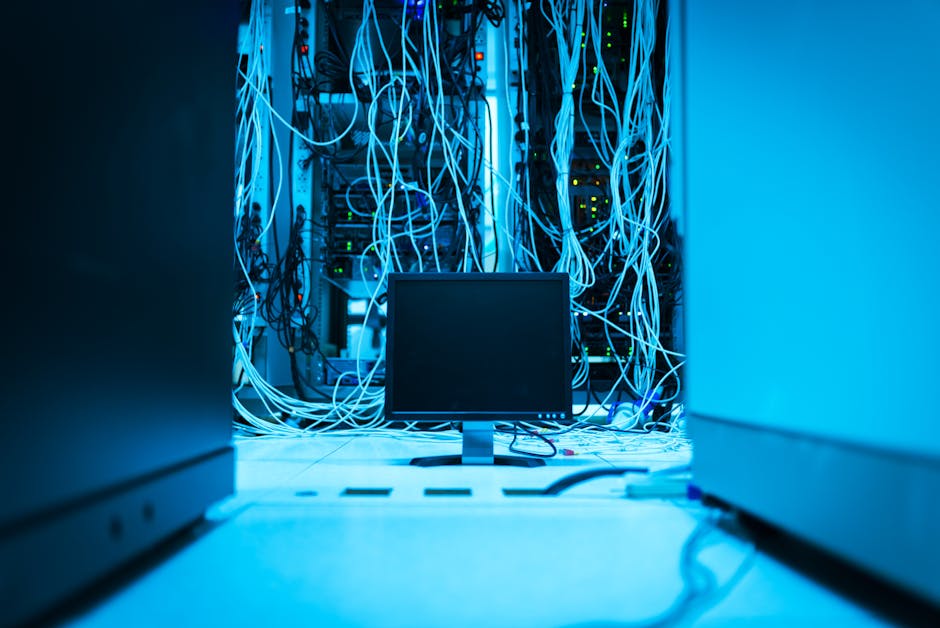
The next constraint on U.S. artificial-intelligence infrastructure may not be GPUs at all. It may be the equipment that moves electricity to them.
That is the increasingly important implication of two developments unfolding at the same time in 2026. On one side, RAND researchers are warning that the electricity requirements associated with AI data centers are growing faster than the U.S. power system can easily accommodate. On the other, the semiconductor and data-center industries are redesigning the electrical architecture inside those facilities, moving toward 800-volt high-voltage direct current (HVDC) systems and relying increasingly on silicon-carbide (SiC) and gallium-nitride (GaN) power semiconductors.
Those trends are usually discussed separately. RAND's Technology and Security Policy Center focuses on whether America can generate and deliver enough electricity to maintain its AI lead. TrendForce focuses on the semiconductor and data-center equipment supply chain. Put the two together, however, and a different bottleneck emerges: even when a utility can eventually provide the megawatts, the United States may still need enough transformers, power converters, high-voltage switches, power modules, busbars, backup systems and specialized SiC and GaN devices to turn that electricity into usable power for AI servers.
In other words, the AI race is moving from a shortage of computing chips toward a broader shortage of power-conversion infrastructure.
RAND's warning starts with the grid
Konstantin F. Pilz, Yusuf Mahmood and Lennart Heim of RAND's Technology and Security Policy Center published AI's Power Requirements Under Exponential Growth in 2025. Their analysis starts from a straightforward observation: the explosive growth of AI compute has created an equally explosive requirement for electricity.
RAND estimated that global AI data centers could require 68 gigawatts (GW) of power capacity by 2027 if AI-chip supply continued growing at the assumed exponential rate. By 2030, the requirement could reach 327 GW. Those numbers are scenarios rather than forecasts with certainty, and RAND explicitly warns that slower chip growth, technical limits or other disruptions could reduce them. But they establish the scale of the infrastructure problem.
The researchers also found that the largest training clusters could become exceptionally large electricity loads. Their model suggests that a single AI training site could require up to 1 GW by 2028 and potentially 8 GW by 2030 if recent scaling trends continue.
RAND's conclusion is unusually direct: the United States currently leads the world in data centers and AI compute
, but the industry is already struggling to obtain sufficient power capacity for rapid expansion. The researchers warn that failure to resolve these bottlenecks could cause AI infrastructure to move overseas, weakening America's competitive position.
The report's full RAND analysis, authored by Pilz, Mahmood and Heim, is particularly important because it separates the problem into generation, transmission, permitting and physical data-center construction. The bottleneck is therefore not simply that America needs more power plants. It needs a system capable of delivering enormous quantities of reliable power to the right sites quickly.
The second RAND report makes the competitiveness issue clearer
A separate RAND working paper, Possible Options for Unlocking and Securing U.S. Energy for AI Production, takes the argument further. Its authors describe the United States as being at risk of losing part of its lead in AI because it is struggling to meet the energy requirements of training and inference.
The report states that the United States is already facing an “AI Energy Gap.” Its authors argue that maintaining America's AI advantage could require not just additional data centers, but also new generation, energy storage and transmission infrastructure.
That framing matters because it changes the definition of an AI semiconductor supply chain. A GPU that has been manufactured but cannot be installed because the facility cannot obtain a grid connection is not productive compute. Likewise, a gigawatt of generation that cannot be converted, distributed and controlled efficiently at the required voltage is not equivalent to a gigawatt of usable AI capacity.
This is where power electronics enters the AI competition.
Why 800V changes the architecture
Traditional data-center electrical systems were not designed around racks consuming hundreds of kilowatts or, increasingly, approaching megawatt-scale power. As rack power rises, distributing electricity at relatively low voltages creates an increasingly unattractive combination of current, copper requirements, heat and conversion losses.
Moving electricity at higher voltage allows the same amount of power to be transported with substantially less current. That makes conductors and distribution equipment more manageable and reduces resistive losses. The trade-off is that high-voltage systems require more sophisticated switching, insulation, protection, conversion and monitoring equipment.
That is the rationale behind the industry's move toward 800V HVDC architectures.
TrendForce's 2026 analysis describes the change as a structural transformation of data-center power infrastructure. Its researchers note that server-rack power has been moving from kilowatt-scale requirements toward megawatt-scale requirements and that 800V HVDC is being adopted to improve efficiency and reliability, reduce copper use and enable more compact systems.
The change is already visible in the next generation of AI platforms. In June 2026, TrendForce reported that NVIDIA's 800V Power Rack was expected to ship as an optional configuration for Vera Rubin in the third quarter of 2026, with broader adoption anticipated with Rubin Ultra.
The numbers explain why. TrendForce estimates that an NVIDIA VR200 rack consumes roughly 225 kW, compared with approximately 150 kW for the previous GB300 generation. Rubin Ultra is expected to push rack power to approximately 660 kW, while some next-generation air-cooled configurations could require 1.2 MW to 1.3 MW.
At those levels, electrical architecture is no longer a supporting detail around the GPU. It becomes part of the computer.
SiC and GaN are the enabling semiconductors
800V distribution does not work simply by changing a few cables. The higher-voltage architecture requires power devices capable of switching and converting electricity efficiently at substantially higher power levels.
This is where SiC and GaN become strategically important.
Both belong to a category commonly called third-generation or wide-bandgap semiconductors. The important point in practical terms is that they can switch electrical power efficiently at higher frequencies, temperatures and voltages than conventional silicon devices in many applications.
SiC is particularly suited to the higher-power portions of the electrical chain. In an AI data center, that can include the front-end conversion from grid electricity and intermediate conversion stages. TrendForce identifies SiC as important for the development of solid-state transformers, which could eventually convert medium-voltage AC from the grid directly into the high-voltage DC required by AI infrastructure.
GaN has a somewhat different role. Its high switching frequency and efficiency make it attractive for smaller, high-density conversion stages closer to the server and power supply. TrendForce expects SiC and GaN penetration in data-center power systems to reach 17% in 2026 and exceed 30% by 2030.
That projection is more consequential than the percentage initially suggests. A 17% penetration rate does not mean that only 17% of an AI data center's power system uses these devices. Their importance can be concentrated in the most technically demanding conversion stages. As the total electrical load rises into hundreds of megawatts or even gigawatts, the absolute quantity and value of power semiconductors can therefore rise much faster than their percentage share of the overall system.
The hidden bottleneck: grid-to-chip conversion
The most useful way to understand the emerging architecture is to follow electricity from the grid to the GPU.
First comes the utility connection. Electricity arrives as high-voltage alternating current. It then has to be transformed and converted. From there, it moves through distribution equipment toward the data-center hall. Eventually it reaches a power supply that produces the voltage and current required by the servers, which then convert it again for the processors, memory and other components.
Every conversion stage introduces some energy loss. At small rack loads, those losses can be tolerated. At hundreds of kilowatts per rack, they become economically and thermally significant.
TrendForce's March 2026 infrastructure analysis argues that the industry is consequently moving toward a more centralized HVDC architecture, with independent power racks serving as an interim step and solid-state transformers becoming increasingly important in the longer-term architecture.
This creates a new concept of the AI supply chain: grid-to-chip efficiency.
The winning AI infrastructure will not necessarily be the one with the most powerful GPU. It may be the one that wastes the least electricity between the utility connection and that GPU.
Why this could become a U.S. competitiveness problem
There are at least three separate bottlenecks hidden inside the phrase “AI power shortage.”
The first is generation. America needs enough electricity-producing capacity to serve new AI loads while also meeting demand from manufacturing, transportation, buildings and existing data centers.
The second is transmission and interconnection. Generation can exist hundreds of miles away from a suitable data-center site. RAND notes that inadequate transmission infrastructure can prevent available power from reaching locations where data centers could be built. Transmission projects can take years because of permitting, land acquisition and coordination requirements.
The third is power conversion. Even after electricity reaches the campus, it must be converted and distributed at the voltages and power densities required by AI systems. That requires specialized transformers, switchgear, power shelves, busbars, UPS systems, battery backup units, power modules and semiconductor devices.
The third category is easy to overlook because it is buried inside the data-center electrical system. Yet it may be the fastest-changing part of the infrastructure.
TrendForce's 2026 research describes the power ecosystem as increasingly strategic. Its analysis says AI data-center demand is pushing suppliers toward HVDC, solid-state transformers and higher-voltage power racks, while power-electronics companies are expanding their manufacturing capacity and securing materials ahead of expected demand.
The GPU bottleneck could move upstream
The semiconductor industry has spent years treating advanced processors as the critical scarce resource in AI. That remains true for leading-edge GPUs, high-bandwidth memory and advanced packaging. But the architecture of AI systems is creating a second semiconductor race underneath the GPU race.
Consider what happens when a new GPU generation becomes dramatically more efficient per calculation but also allows operators to put more computing into each rack. Efficiency at the chip level can paradoxically increase the demand for power infrastructure because the operator can economically deploy more compute in the same physical footprint.
This creates what could be called the power-density paradox: better computing efficiency does not necessarily reduce the amount of power infrastructure required. It can instead allow much more computation to be concentrated in each square meter.
That is precisely why rack-level power is rising so quickly.
TrendForce's June analysis expects 800V power racks to become increasingly important as rack consumption approaches the upper hundreds of kilowatts and eventually megawatt levels. Its assessment also notes that widespread 800V adoption is more likely after the Rubin Ultra generation, with broader deployment expected around 2028.
That gives the industry a relatively narrow window to scale a completely different class of infrastructure.
SiC and GaN face their own supply-chain constraints
The shift to third-generation power semiconductors does not eliminate semiconductor bottlenecks. It creates new ones.
SiC manufacturing depends on specialized substrates, crystal growth, wafer processing and packaging. GaN requires its own manufacturing and epitaxy capabilities. Both technologies also require suppliers to demonstrate reliability at the demanding temperatures, voltages and operating cycles expected in infrastructure equipment.
TrendForce's 2026 research identifies advanced packaging and control over high-quality crystal-growth processes as increasingly important competitive factors. This means that the strategic supply chain for AI is expanding beyond leading-edge logic fabs and memory plants.
A country can therefore have access to the latest GPU architecture while still being constrained by its ability to manufacture the power electronics needed to operate those GPUs at scale.
This is particularly important for the United States because much of the global power-electronics ecosystem is concentrated in Asia and Europe. Taiwan has strong positions in power supplies and data-center infrastructure, while European companies have major capabilities in industrial power semiconductors. Japan also remains important in power devices and materials.
The resulting strategic question is not simply whether America can manufacture enough AI processors. It is whether it can secure the complete electrical supply chain required to deploy them.
The 800V transition also creates a new manufacturing race
The move toward 800V HVDC has another implication: data-center electrical equipment is becoming more standardized around a smaller number of very large customers and platforms.
TrendForce's March 2026 analysis noted that only a limited number of suppliers currently have the ability to address both the traditional data-center electrical infrastructure and the computing-side power requirements. Companies such as Delta Electronics, Vertiv, Schneider Electric, Lite-On and Flex are therefore competing not merely to sell an individual component but to cover increasingly large portions of the electrical chain.
This matters because AI infrastructure is increasingly being built in enormous standardized blocks. A hyperscaler deploying thousands of similar racks does not want to engineer every electrical connection independently. It wants repeatable power racks, distribution systems, cooling systems and control software that can be deployed repeatedly.
The supplier that controls that repeatable architecture can become just as strategically important as the company supplying the processor.
The United States may need to redefine what an AI semiconductor is
There is a larger lesson in the convergence of RAND's energy research and TrendForce's semiconductor analysis.
For decades, semiconductor competitiveness was largely measured through logic-process technology, transistor density, fabrication capacity and access to advanced packaging. AI is expanding that definition.
A modern AI factory is effectively an electrical machine containing computing equipment. Its performance depends on how efficiently it can turn grid electricity into computation while controlling heat, voltage fluctuations and instantaneous changes in workload.
That means power semiconductors increasingly sit on the critical path between national electricity policy and national AI policy.
RAND's warning that AI infrastructure could be constrained by insufficient electricity therefore should not be interpreted only as an argument for building more power plants. The complementary question is whether the equipment required to convert, distribute and control that electricity can scale at the same speed.
If generation is expanded faster than transmission, transmission becomes the bottleneck. If transmission expands faster than data-center construction, interconnection becomes the bottleneck. If data centers are built faster than their electrical systems can be equipped, power conversion becomes the bottleneck.
And if demand for SiC, GaN, transformers, solid-state transformers, high-voltage switches and specialized power modules grows faster than manufacturing capacity, the constraint moves one step further upstream.
The strategic race is becoming “grid to chip”
The most revealing phrase in the 2026 power architecture debate may therefore be “grid to chip.” The AI industry is beginning to optimize the entire path between the electricity network and the processor rather than treating power delivery as an invisible utility.
That changes how U.S. competitiveness should be measured. Counting GPUs, HBM capacity and advanced fabs remains essential, but it is no longer sufficient. Policymakers and companies increasingly need to ask how many megawatts can be connected, how quickly those megawatts can be converted into usable DC power, how much is lost along the way, and whether the necessary power-electronics equipment is actually available.
The result could be an unexpected reversal of the conventional AI supply-chain hierarchy. GPUs remain the visible symbol of AI computing power, but the less visible components surrounding them may determine how many GPUs can actually operate.
That is why the emerging 800V HVDC architecture and the rise of SiC and GaN deserve to be treated as strategic AI technologies rather than ordinary electrical-engineering upgrades. RAND's research identifies electricity availability as a potential limit on America's AI ambitions. TrendForce's 2026 analysis shows that the industry is responding by rebuilding the electrical architecture around much higher power densities.
The next phase of the AI race may therefore be decided not only in semiconductor fabs, but in transformer factories, power-module plants and the supply chains that connect the electric grid to the silicon doing the computation. If America solves the GPU problem but cannot solve the power-electronics problem, the country's AI infrastructure could still hit a wall.