Fundamentals for Rockwell Automation, Inc.
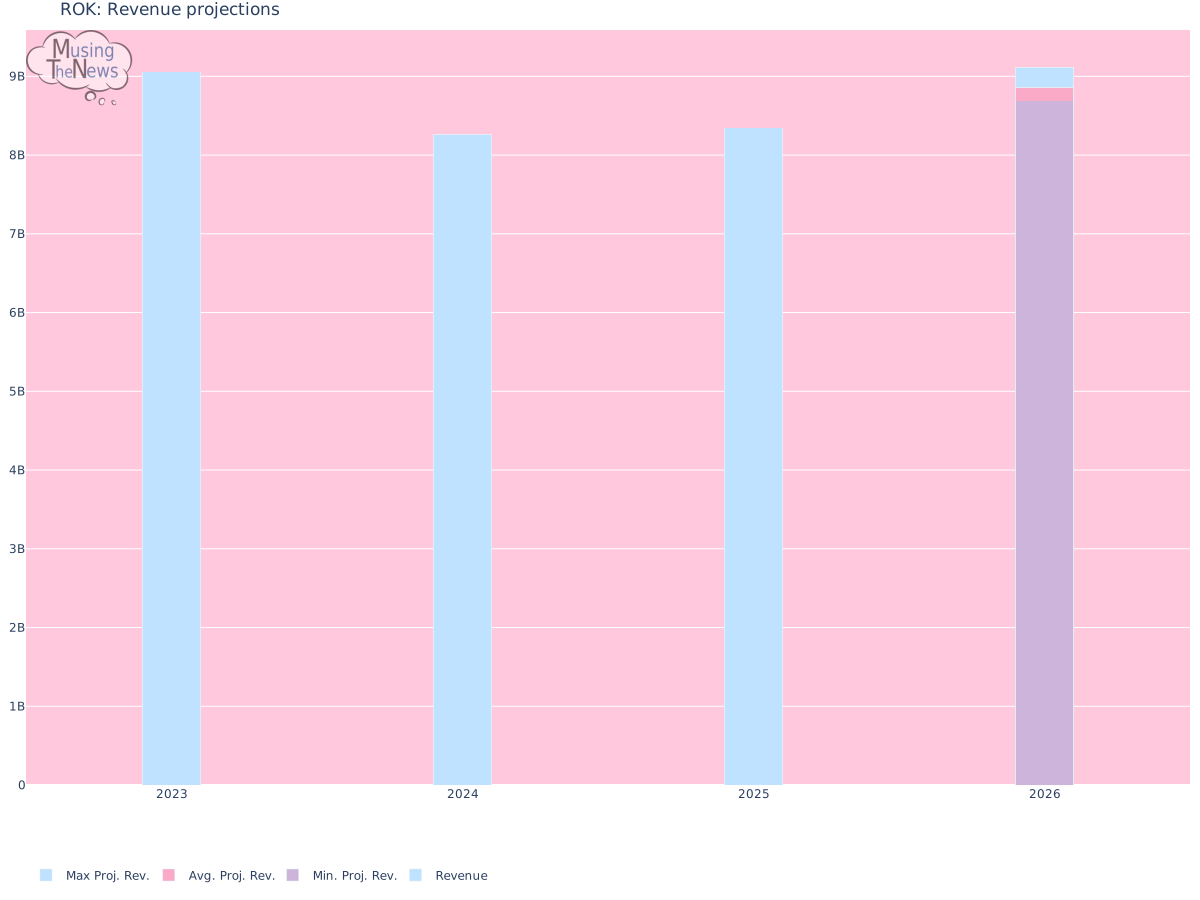
ROK is projected to see lower revenues than in the previous year, a trend that usually concerns investors. Declining revenues often harm a company's profitability, leading ...






Business Operations:
Sector: IndustrialsIndustry: Specialty Industrial Machinery
Rockwell Automation, Inc., together with its subsidiaries, provides industrial automation and digital transformation solutions in North America, Europe, the Middle East, Africa, the Asia Pacific, and Latin America. It operates in three segments: Intelligent Devices, Software & Control, and Lifecycle Services. The company offers drives, motion, advanced material handling, safety, sensing, industrial components, hardware, software, and configured-to-order products; and control and visualization software and hardware, digital twin, simulation and information software, network and security infrastructure, and custom-engineered systems. It also provides digital consulting, professional services, engineered-to-order solutions, recurring services, cybersecurity, safety, remote monitoring, customer technical support and repair, asset management and optimization consulting, and training, as well as spare parts. The company sells its products through independent distributors in relation to its direct sales force. It serves discrete end markets, including automotive, semiconductor, e-commerce, and warehouse automation; hybrid end markets, such as food and beverage, life sciences, and tire; and process end markets comprising energy, mining, and chemicals. The company was formerly known as Rockwell International Corporation and changed its name to Rockwell Automation, Inc. in February 2002. Rockwell Automation, Inc. was founded in 1903 and is headquartered in Milwaukee, Wisconsin.
Revenue projections:
Financial Ratios:
| currentRatio | 1.07500 |
|---|---|
| forwardPE | 28.28350 |
| debtToEquity | 103.34700 |
| earningsGrowth | 0.40400 |
| revenueGrowth | 0.07900 |
| grossMargins | 0.49092 |
| operatingMargins | 0.20968 |
| trailingEps | 10.43000 |
| forwardEps | 14.92142 |
Rockwell Automation, Inc.'s current ratio, being 1.075, means the company is well-positioned to meet its short-term debt obligations. This reflects Rockwell Automation, Inc.'s strong liquidity, as its cash reserves and current assets provide more than enough coverage for its immediate liabilities.
Rockwell Automation, Inc.'s Forward PE is well-positioned, indicating the stock price is favorable compared to its earnings. This suggests the stock is not overpriced and offers room for growth, making it an attractive option for investors looking for future value appreciation.
ROK's elevated debt-to-equity ratio shows that the company is relying heavily on debt to fund its activities. This high leverage can amplify returns but also heightens financial risks if cash flow becomes constrained.
ROK's positive gross and operating margins suggest strong profitability. These margins reflect effective cost management and revenue generation, indicating that the company is efficiently managing its operations and maintaining financial health.
ROK's forward EPS being higher than its trailing EPS suggests that the company is expected to generate stronger profits this year. This points to improving financial performance, with ROK anticipated to deliver better earnings than it did in the prior year.
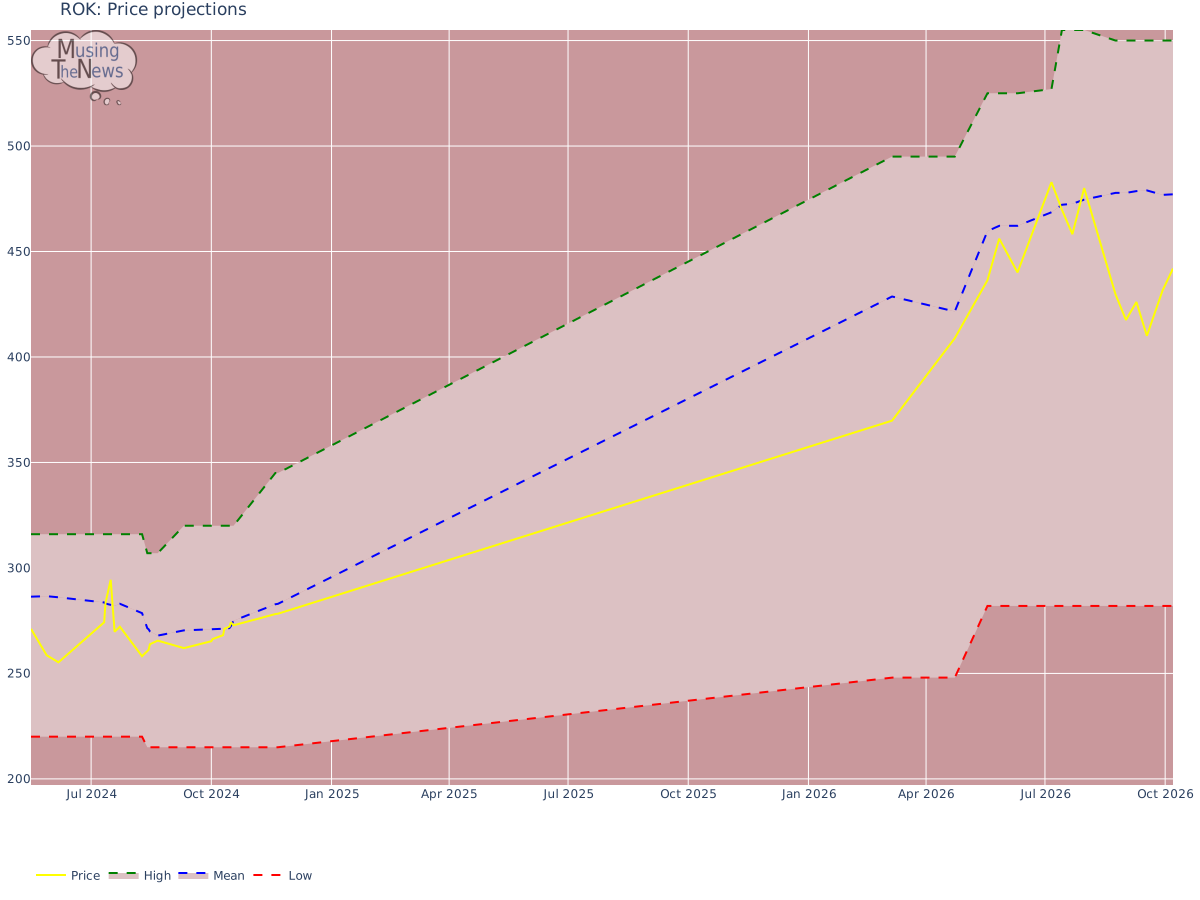
Price projections:
Insider Transactions:
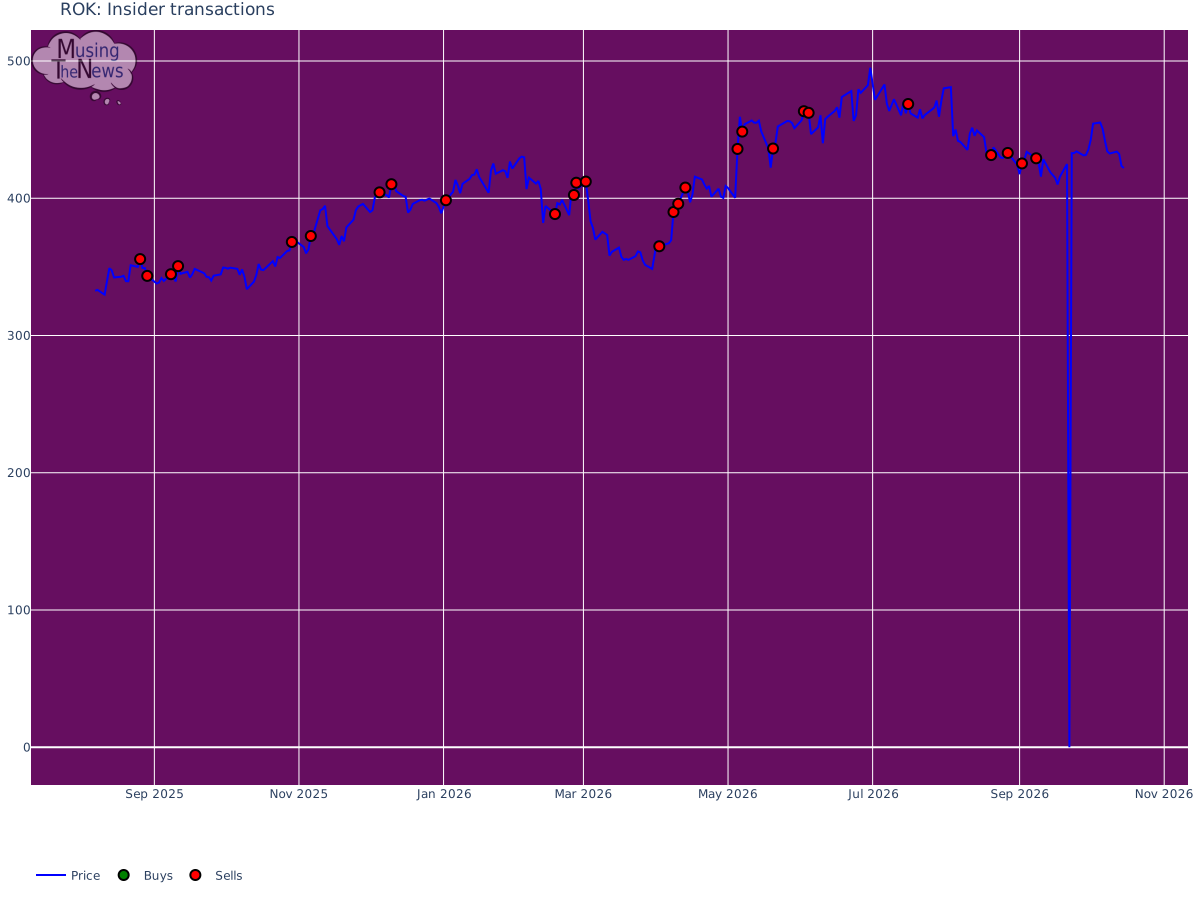
27 sell transactions of ROK were recorded, with market price hovering near 405.7433336046007.During the review period, no sell transactions were executed.The recent trend of more purchases than sales at ROK's current price could signal investor optimism. This pattern may point to a positive outlook for the stock, as it indicates growing confidence in its potential to perform well in the future.
Recommendation changes over time:
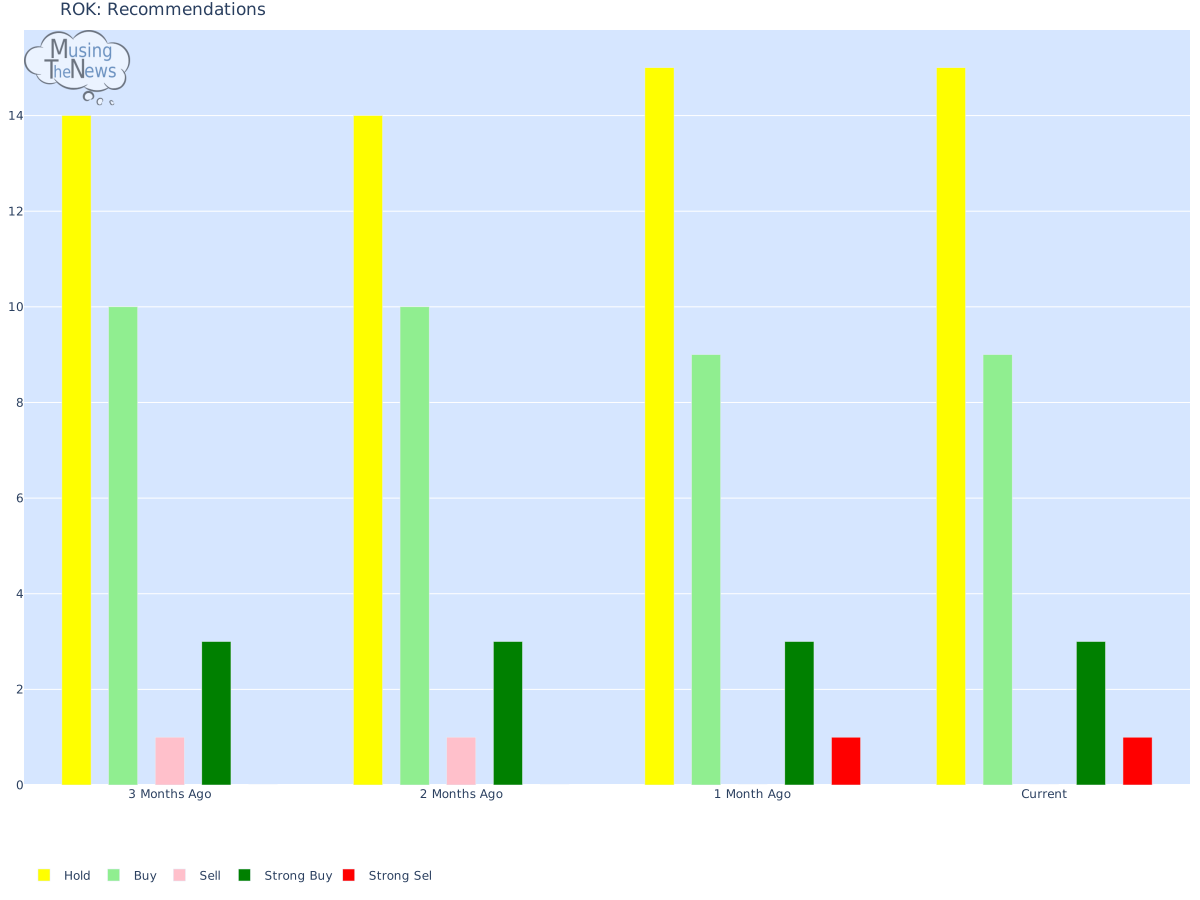
Analysts' buy bias toward Rockwell Automation, Inc. suggests the stock is seen as a solid investment, potentially motivating investors to consider it for their portfolios. With this positive outlook, Rockwell Automation, Inc. is likely to be viewed as a secure place to allocate funds, driving further interest in the stock.