Fundamentals for The Procter & Gamble Company
The Procter & Gamble Company's low growth in both earnings and revenue indicates the company's profits may decrease. This trend could signal a downturn in financial perform...






Business Operations:
Sector: Consumer DefensiveIndustry: Household & Personal Products
The Procter & Gamble Company provides branded consumer packaged goods worldwide. It operates through Beauty; Grooming; Health Care; Fabric & Home Care; and Baby, Feminine & Family Care segments. The company offers conditioners, shampoos, styling aids, and treatments under the Head & Shoulders, Herbal Essences, Pantene, and Rejoice brands; antiperspirants, deodorants, and personal cleansing products under the Native, Old Spice, Safeguard, and Secret brands; and facial moisturizers, cleaners, and treatments under the Olay and SK-II brands. It also provides blades, razors, shave products, appliances, and other grooming products under the Braun, Gillette, and Venus brands. In addition, the company offers toothbrushes, toothpastes, and other oral care products under the Crest and Oral-B brands; and gastrointestinal, pain relief, rapid diagnostics, respiratory, vitamins/minerals/supplements, and other personal health care products under the Metamucil, Neurobion, Pepto-Bismol, and Vicks brands. Further, it provides fabric enhancers, and laundry additives and detergents under the Ariel, Downy, Gain, and Tide brands; and air and dish care, P&G professional, and surface care under the Cascade, Dawn, Fairy, Febreze, Mr. Clean, and Swiffer brands. Additionally, the company offers baby wipes, and taped diapers and pants under the Luvs and Pampers brands; adult incontinence and menstrual care products under the Always, Always Discreet, and Tampax brands; and paper towels, tissues, and toilet papers under the Bounty, Charmin, and Puffs brands. It sells its products through mass merchandisers, social and e-commerce channels, grocery and specialty beauty stores, membership club stores, drug and department stores, distributors, wholesalers, airport duty-free and high-frequency stores, pharmacies, electronics stores, and professional channels, as well as directly to consumers. The Procter & Gamble Company was founded in 1837 and is headquartered in Cincinnati, Ohio.
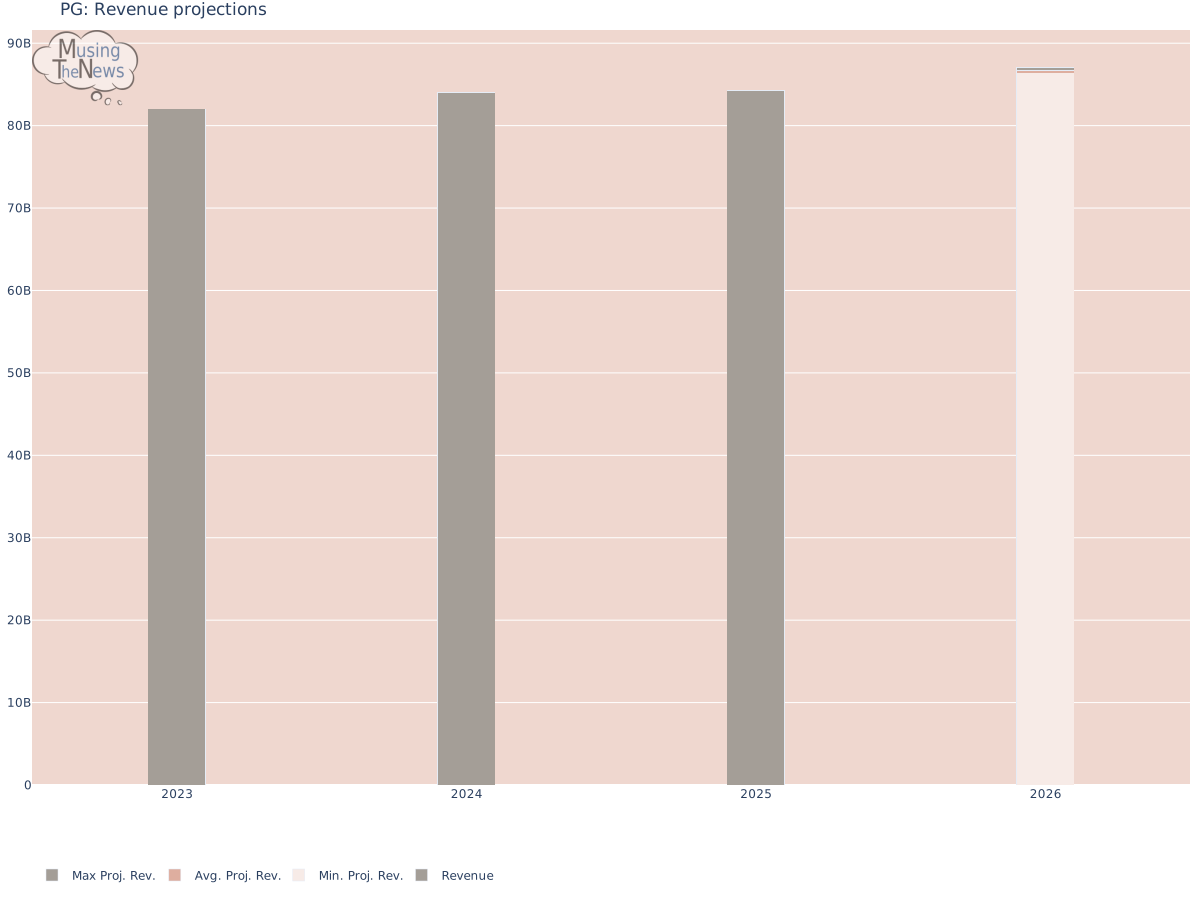
Revenue projections:
Financial Ratios:
| currentRatio | 0.67700 |
|---|---|
| forwardPE | 21.16483 |
| debtToEquity | 64.49000 |
| earningsGrowth | -0.15500 |
| revenueGrowth | 0.01500 |
| grossMargins | 0.50873 |
| operatingMargins | 0.22085 |
| trailingEps | 6.77000 |
| forwardEps | 7.39576 |
PG's current ratio of 0.677 signals that the company may not have sufficient cash reserves and current assets to cover short-term debt. This suggests potential liquidity problems and could raise concerns about the company's ability to meet its immediate financial commitments.
PG's Forward PE ratio suggests that the stock is priced appropriately in relation to its earnings. Not being overpriced, it offers room for growth, signaling potential upside for investors looking for a stock with reasonable valuation and growth potential.
The Procter & Gamble Company's low growth in both earnings and revenue indicates the company's profits may decrease. This trend could signal a downturn in financial performance, suggesting that The Procter & Gamble Company might struggle to maintain its current profit levels.
The Procter & Gamble Company's positive gross and operating margins indicate a profitable and efficient business model. These metrics highlight the company's ability to generate income while controlling operational costs, reflecting strong financial performance.
With a forward EPS greater than its trailing EPS, The Procter & Gamble Company is forecasted to be more profitable this year than last. This growth expectation reflects confidence in the company's earnings potential and suggests an improving financial trajectory for the year ahead.
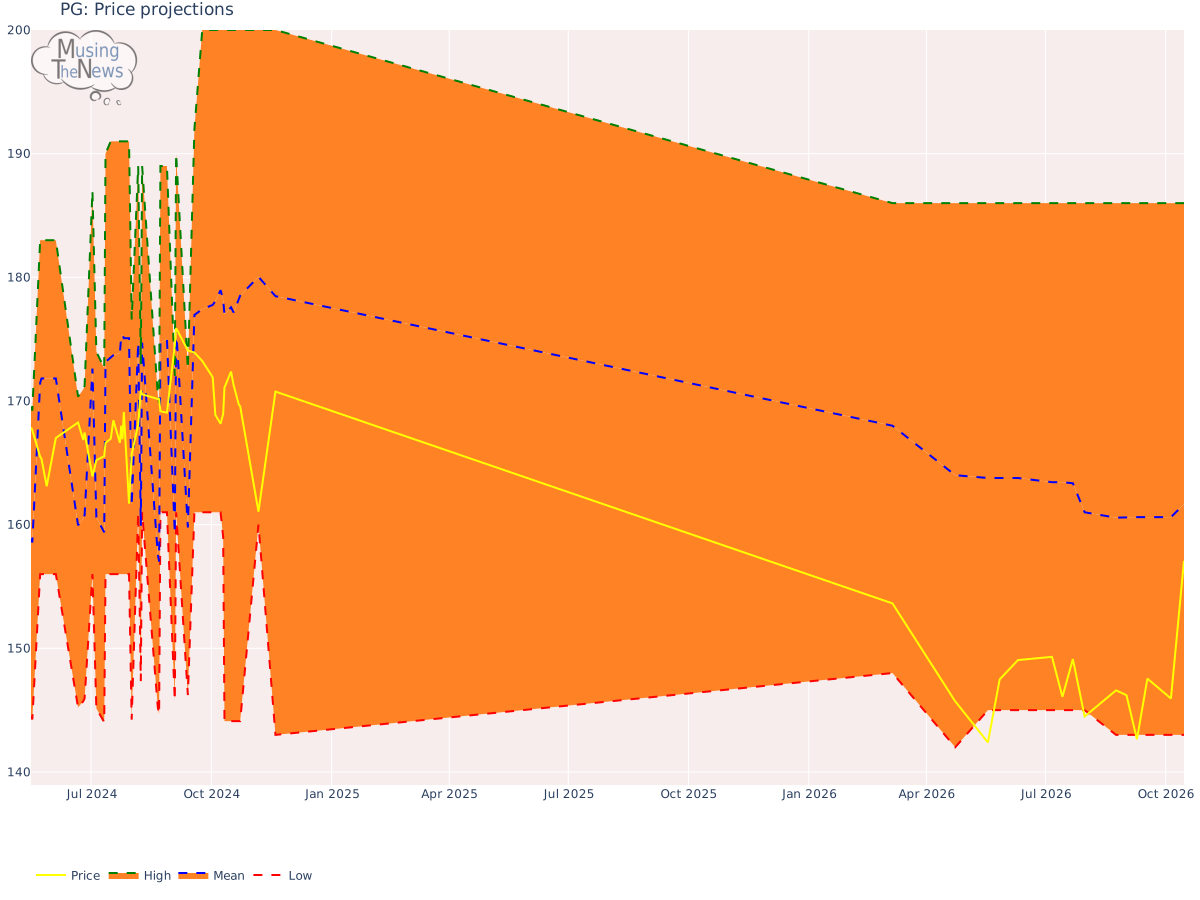
Price projections:
Insider Transactions:
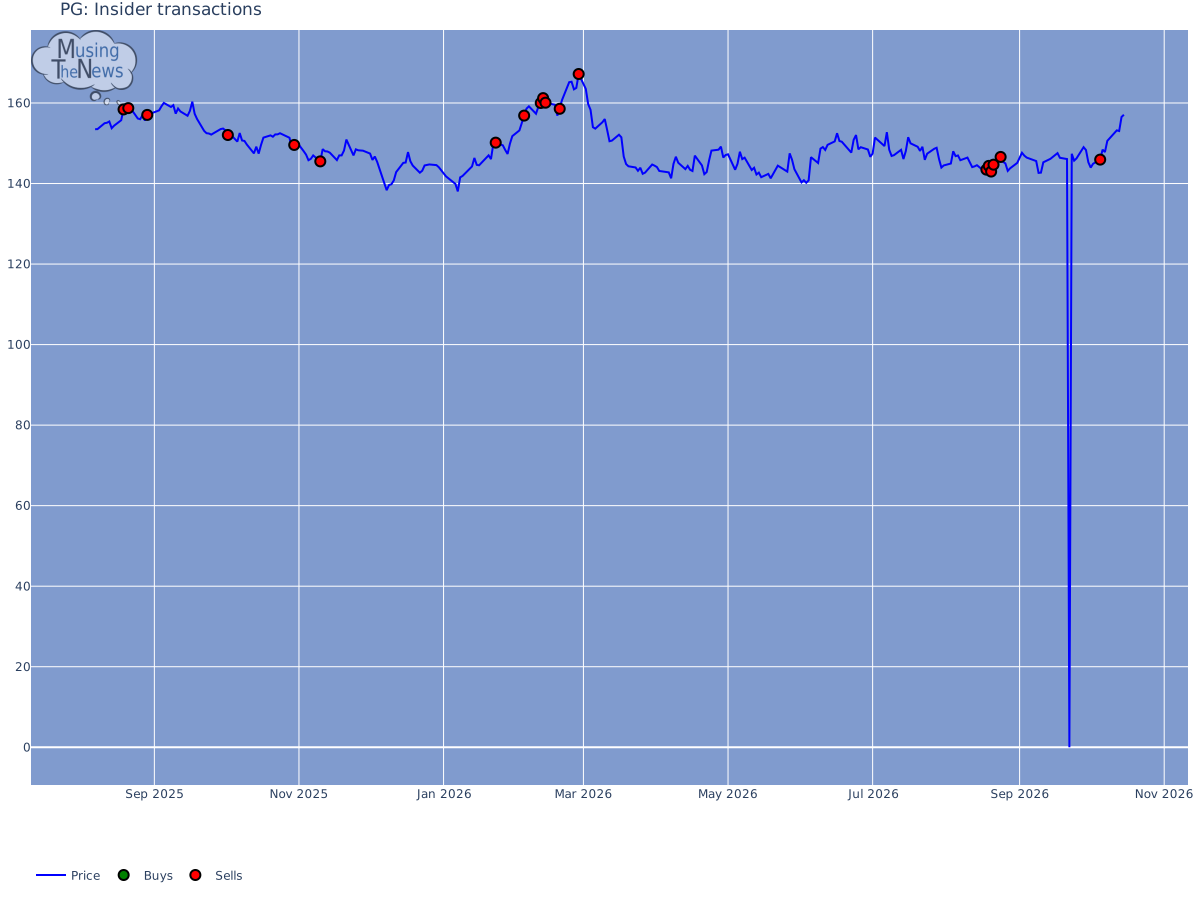
19 The Procter & Gamble Company shares were sold in recent transactions, with market price at 152.80947313810648.There were no sell transactions during the given period.The Procter & Gamble Company has seen more buys than sells at its current price levels, which may suggest optimism among investors. This buying trend could indicate that the market expects a favorable performance for the stock in the near future.
Recommendation changes over time:
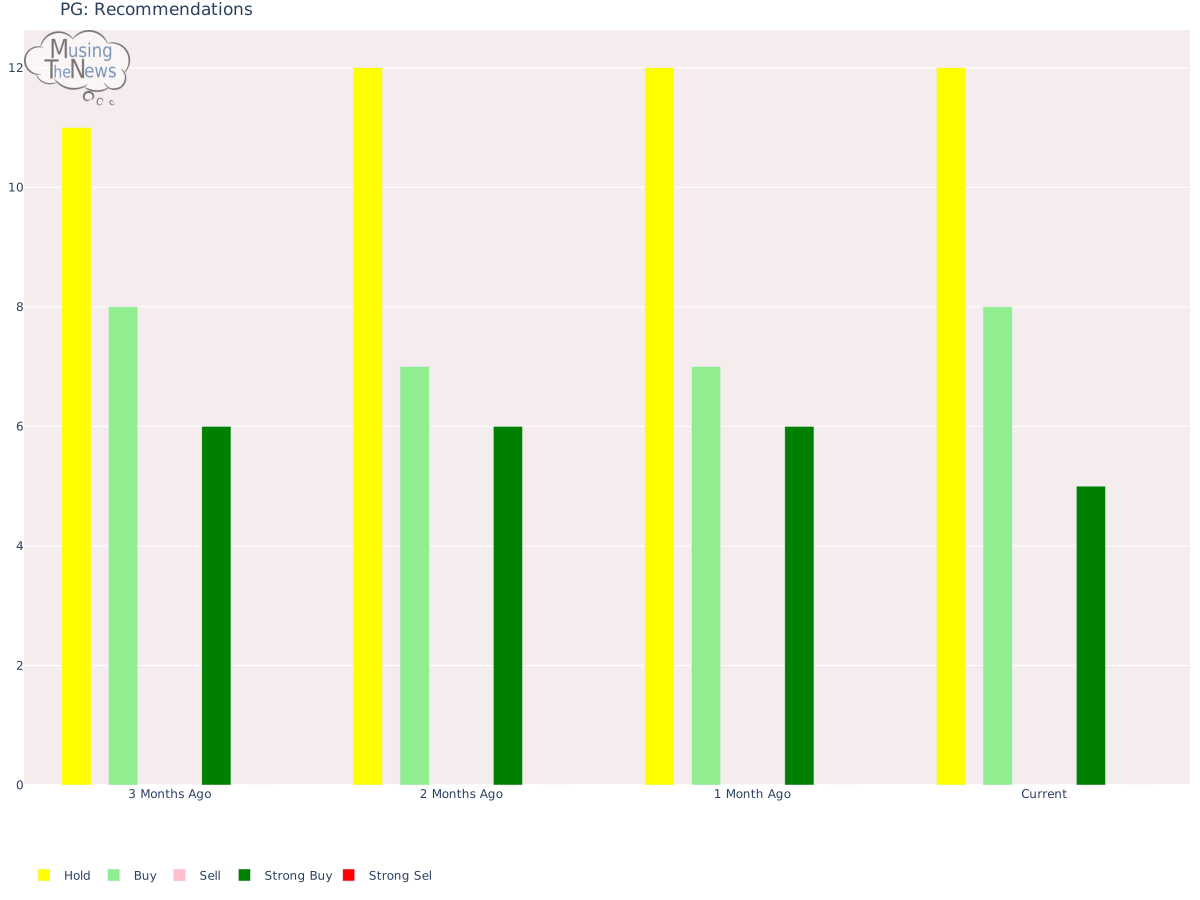
Recent analysis shows a strong buy bias for The Procter & Gamble Company, encouraging investors to view it as a solid investment option. The positive sentiment surrounding The Procter & Gamble Company suggests it could be an attractive place to allocate funds, motivating potential investors to consider the stock as a valuable part of their portfolio.