Fundamentals for NIKE, Inc.
NIKE, Inc.'s negative gross and operating margins signal that the company is not profitable, struggling to cover costs associated with production and operations. This could...






Business Operations:
Sector: Consumer CyclicalIndustry: Footwear & Accessories
NIKE, Inc., together with its subsidiaries, designs, develops, markets, and sells athletic and casual footwear, apparel, equipment, accessories, and services for men, women, and kids in North America, Europe, the Middle East, Africa, Greater China, the Asia Pacific, and Latin America. The company offers its products under the NIKE, Jordan, Jumpman, Converse, Chuck Taylor, All Star, One Star, Star Chevron, and Jack Purcell trademarks. It also provides a line of performance equipment and accessories, including bags, socks, sport balls, eyewear, timepieces, digital devices, bats, gloves, protective equipment, and other equipment for sports activities, as well as various plastic products to other manufacturers; distributes and licenses casual sneakers, apparel, and accessories; and markets apparel with licensed college and professional team and league logos. In addition, the company offers consumer services and experiences, including sport focused events and activations; fitness and activity apps; sport, fitness, and wellness content; and digital services and features in retail stores. It sells its products to footwear stores; sporting goods stores; athletic specialty stores; department stores; skate, tennis, and golf shops; and other wholesale accounts through NIKE-owned retail stores, independent distributors, licensees, sales representatives, and digital platforms. The company was formerly known as Blue Ribbon Sports, Inc. and changed its name to NIKE, Inc. in May 1971. NIKE, Inc. was founded in 1964 and is headquartered in Beaverton, Oregon.
Revenue projections:
Financial Ratios:
| currentRatio | 2.07500 |
|---|---|
| forwardPE | 20.99291 |
| debtToEquity | 73.09500 |
| earningsGrowth | -0.02100 |
| revenueGrowth | -0.04300 |
| grossMargins | 0.43407 |
| operatingMargins | 0.07919 |
| trailingEps | 2.08000 |
| forwardEps | 1.68152 |
NKE's current ratio of 2.075, indicating that the company can meet its short-term debt obligations with ease. This high liquidity level is a positive sign, as NKE has enough cash and current assets to handle its immediate liabilities comfortably.
NKE's Forward PE being in a good range suggests that its stock price is aligned well with earnings. The stock is not considered overpriced, offering room for future growth, which makes it an appealing investment opportunity with the potential for value appreciation.
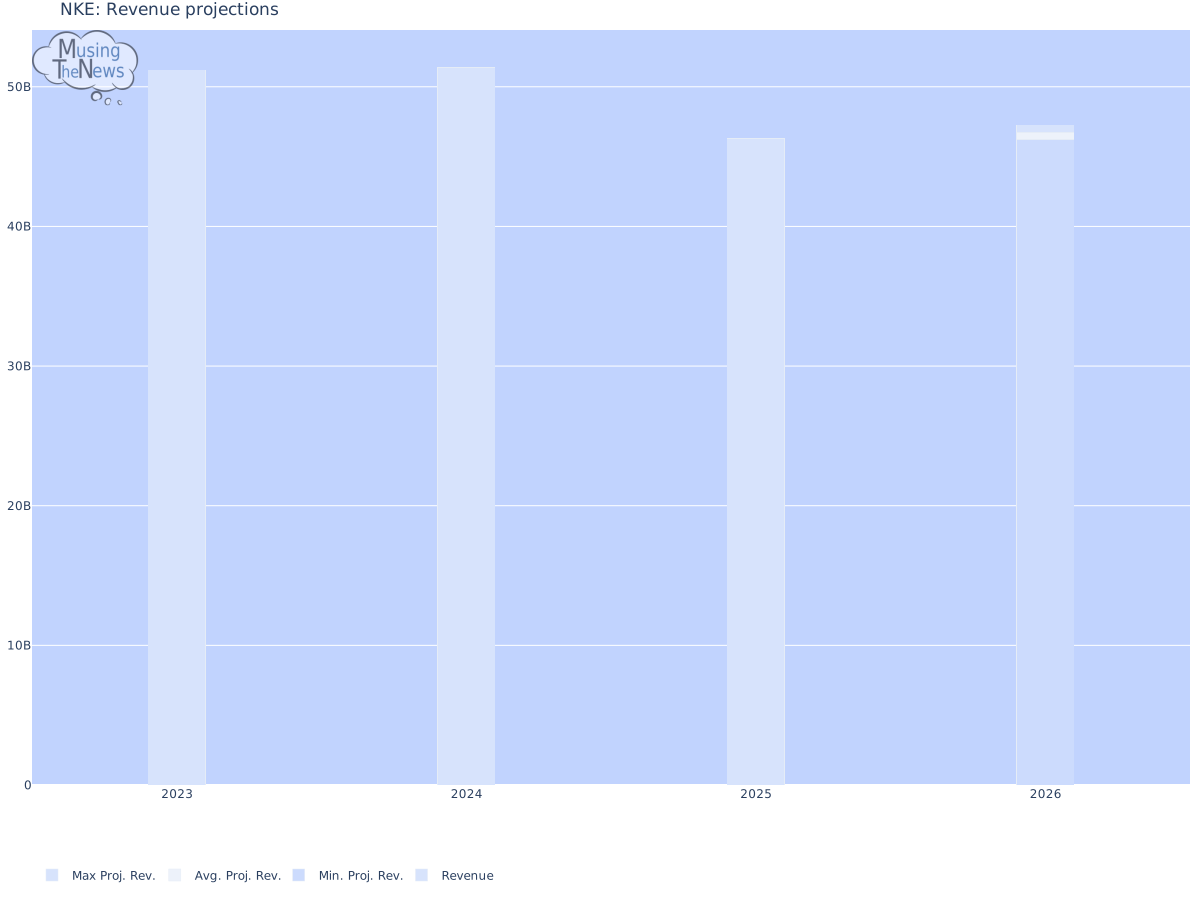
With both earnings and revenue growth in low territory, NKE is likely to see shrinking profits. This signals a possible downturn in the company's financial health and may raise concerns about its future profitability.
NIKE, Inc.'s negative gross and operating margins signal that the company is not profitable, struggling to cover costs associated with production and operations. This could be a red flag for its financial performance moving forward.
NKE's forward EPS, being lower than its trailing EPS, points to an expected decline in profitability. This suggests that the company's financial performance may weaken in the upcoming year.
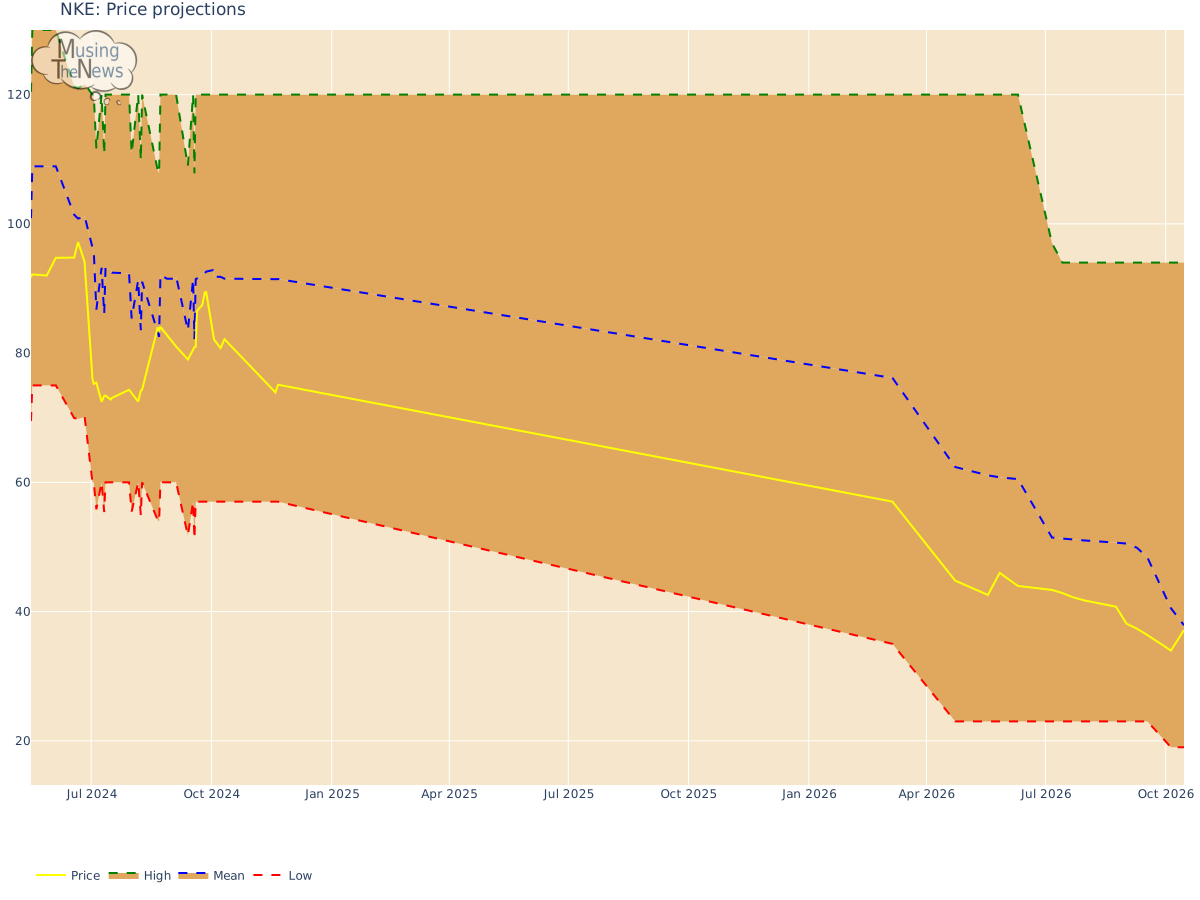
Price projections:
Insider Transactions:
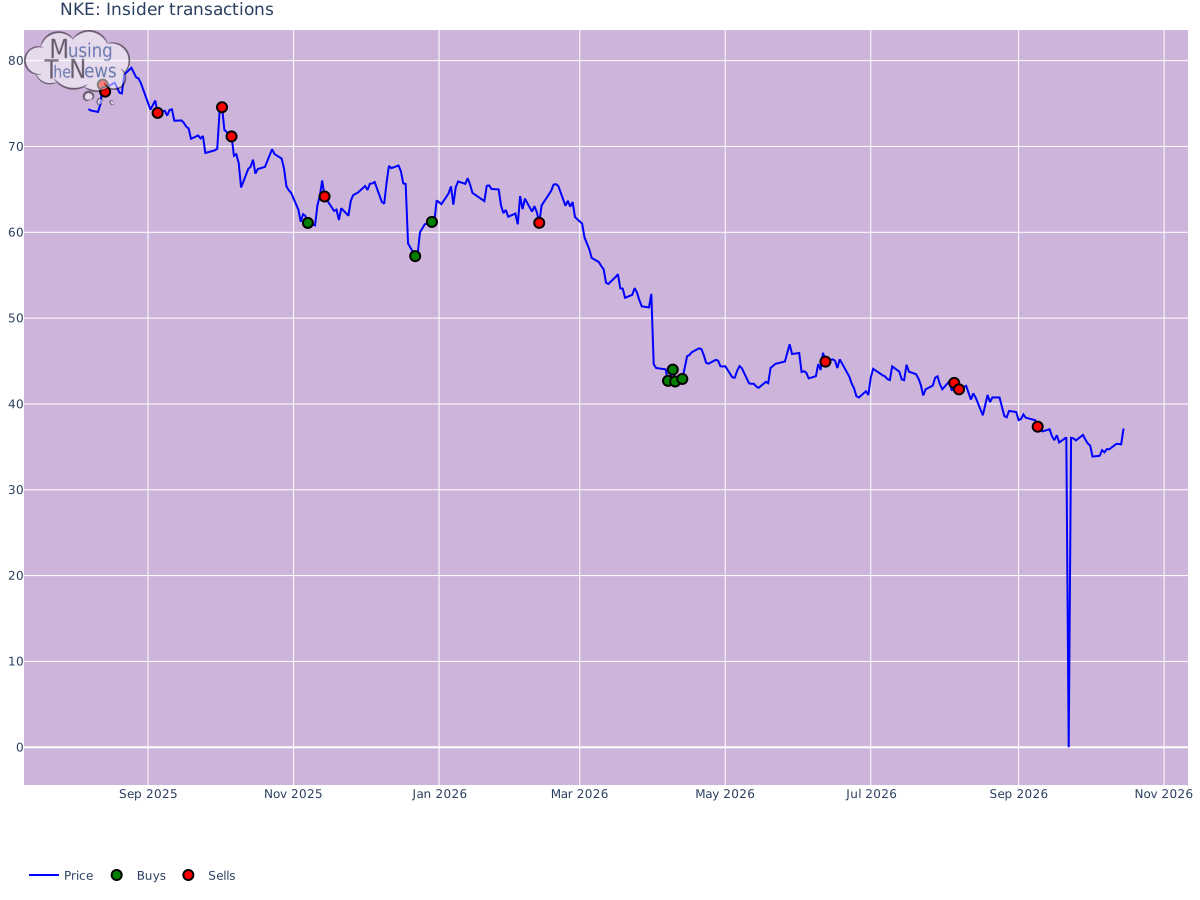
NKE experienced 11 selling transactions, with market price of 60.44909043745561.7 NKE stock purchases took place, with market price of 50.24857112339565.Insider transactions fail to demonstrate any noticeable trend, leaving ambiguity about the company's potential trajectory or changes in its strategic approach.
Recommendation changes over time:
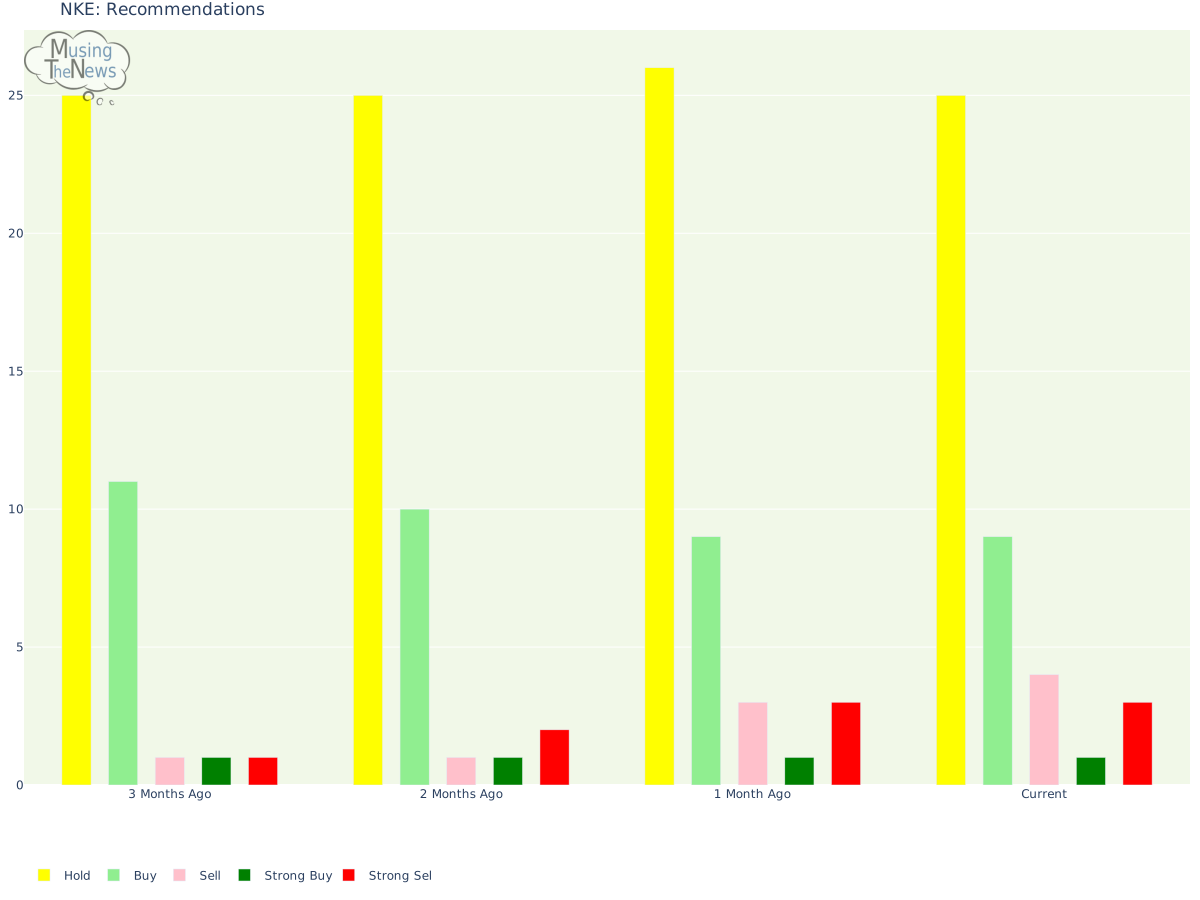
The recent buy bias for NKE from analysts signals strong confidence in the stock's potential. This positive sentiment could encourage investors to see NKE as a smart place to invest their money, especially those looking for stable, long-term returns in a well-established company.