
More about Camden Property Trust
Regulatory Filings for Camden Property Trust
Fundamentals for Camden Property Trust

Fraud, Delays, and High Fees—Gone: The Underrated Fintech Shift Reshaping U.S. Local Economies
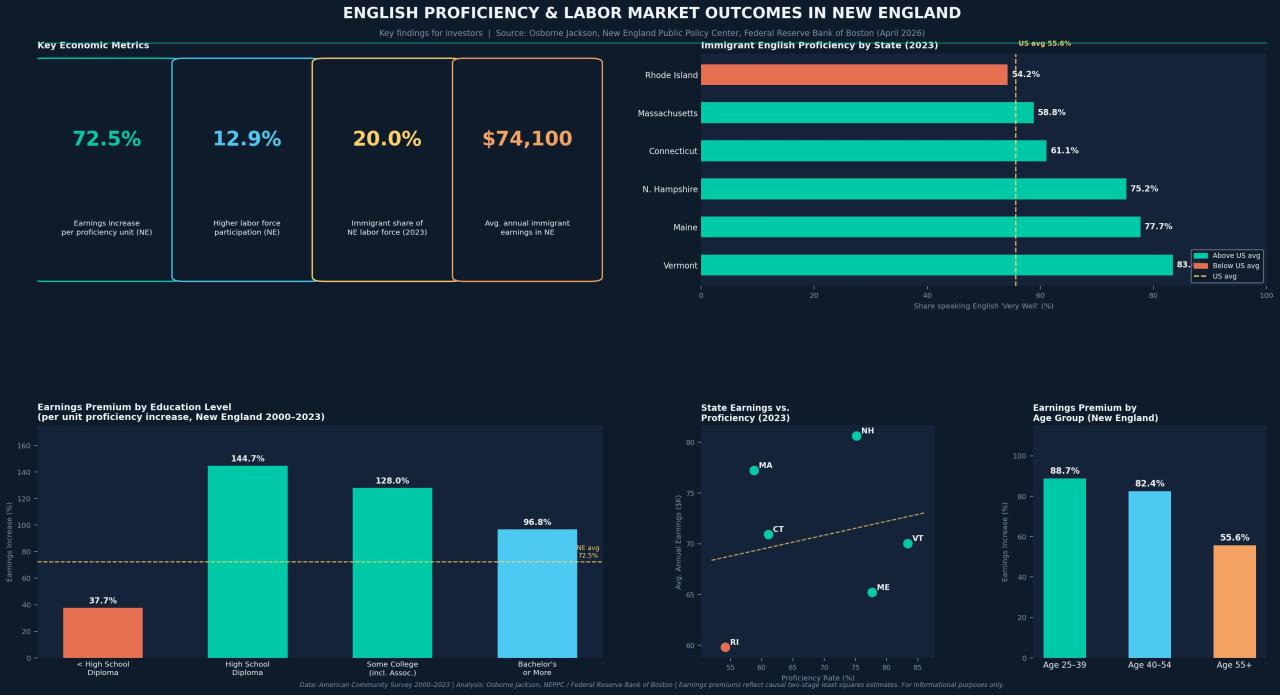
From Rhode Island to Vermont: The Proficiency Gap That's Quietly Dividing New England's Workforce

Regional Airports Poised for Growth Amid Airline Shakeups

From Fuel Shock to Factory Revival: The Surprising Rise of Hyper-Local Supply Chains in the U.S.
Fundamentals for Camden Property Trust



Business Operations:
Sector: Real EstateIndustry: REIT - Residential
Camden Property Trust, an S&P 500 Company, is a real estate company. The firm is primarily engaged in the ownership, management, development, redevelopment, acquisition, and construction of multifamily apartment communities. Camden owns and operates 172 properties containing 58,759 apartment homes across the United States. Upon completion of 3 properties currently under development, the Company's portfolio will increase to 59,921 apartment homes in 175 properties.
Revenue projections:
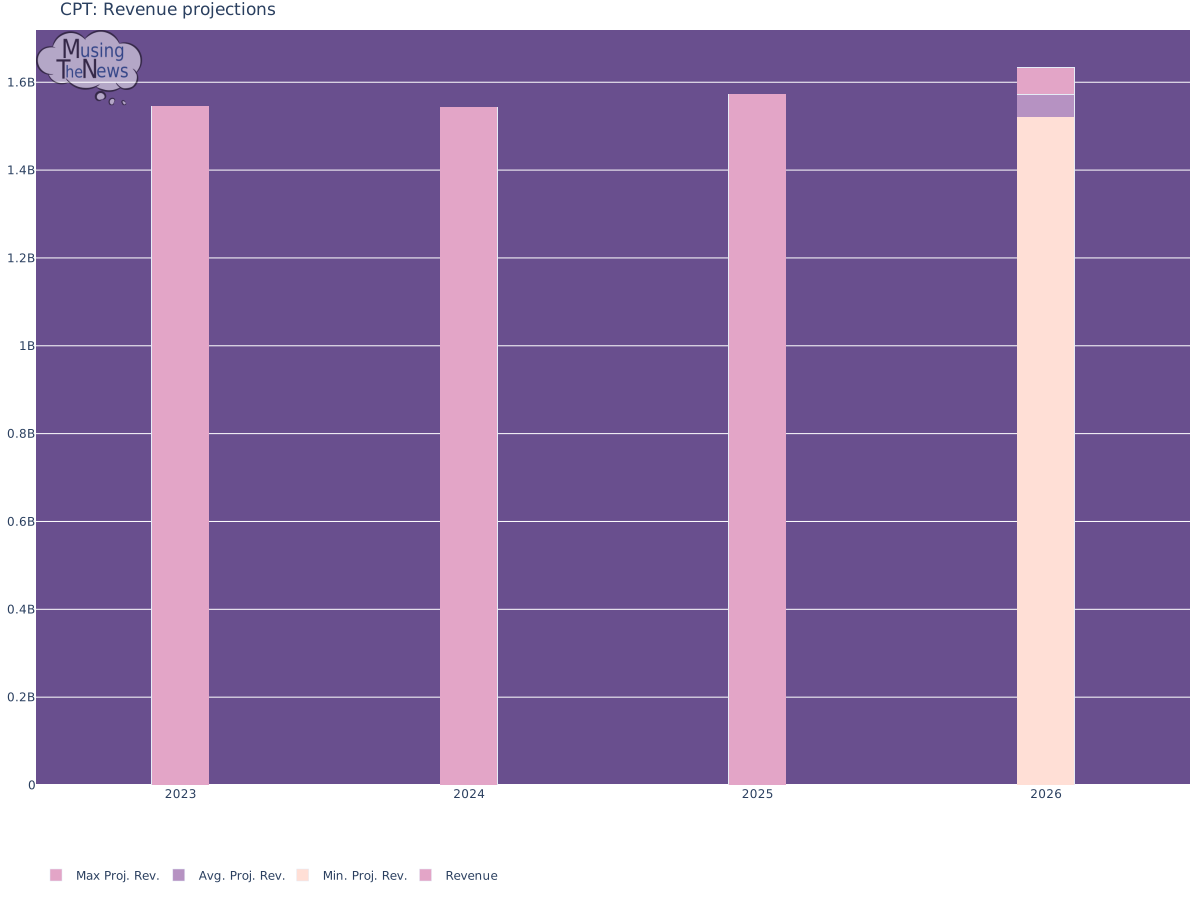
Camden Property Trust's revenue is projected to decrease from last year, a development that could lead investors to adopt a more cautious approach. A revenue decline can negatively affect profitability, signaling challenges for the company and making it less attractive for those seeking solid financial performance.
Financial Ratios:
| currentRatio | 0.029000 |
|---|---|
| forwardPE | 59.789585 |
| debtToEquity | 88.402000 |
| earningsGrowth | 2.876000 |
| revenueGrowth | 0.022000 |
| grossMargins | 0.617310 |
| operatingMargins | 0.197970 |
| trailingEps | 3.540000 |
| forwardEps | 1.697620 |
Camden Property Trust's current ratio being 0.029 highlights potential liquidity concerns, as the company may not have enough cash reserves and assets to cover short-term debts. This raises questions about how Camden Property Trust will meet its immediate financial obligations.
CPT's high forward PE indicates potential overvaluation, which may restrict future price increases and prompt a correction. Investors should evaluate this metric carefully in conjunction with other fundamental indicators to assess the stock's true growth potential.
Camden Property Trust's elevated debt-to-equity ratio suggests that the company is using significant debt to finance its operations. This level of leverage can amplify financial risk, particularly if profitability decreases or external conditions become unfavorable.
CPT's forward EPS is less than its trailing EPS, signaling that the company's profitability is expected to shrink. This points to a potential downturn in earnings compared to last year.
Price projections:
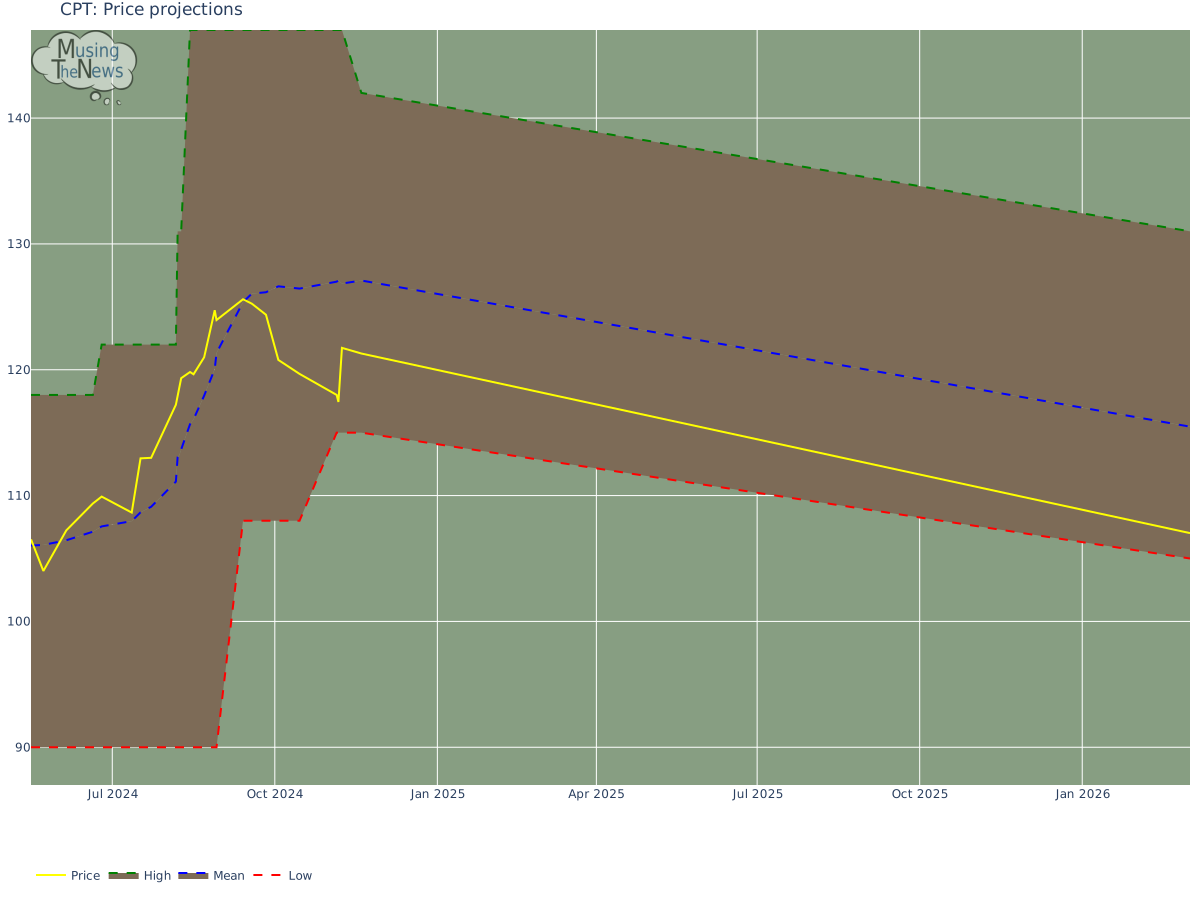
CPT's price has consistently remained near the lower edge of projections, suggesting that it is not fully meeting market expectations. This could indicate a need for improved performance or strategies to boost investor confidence.
Insider Transactions:
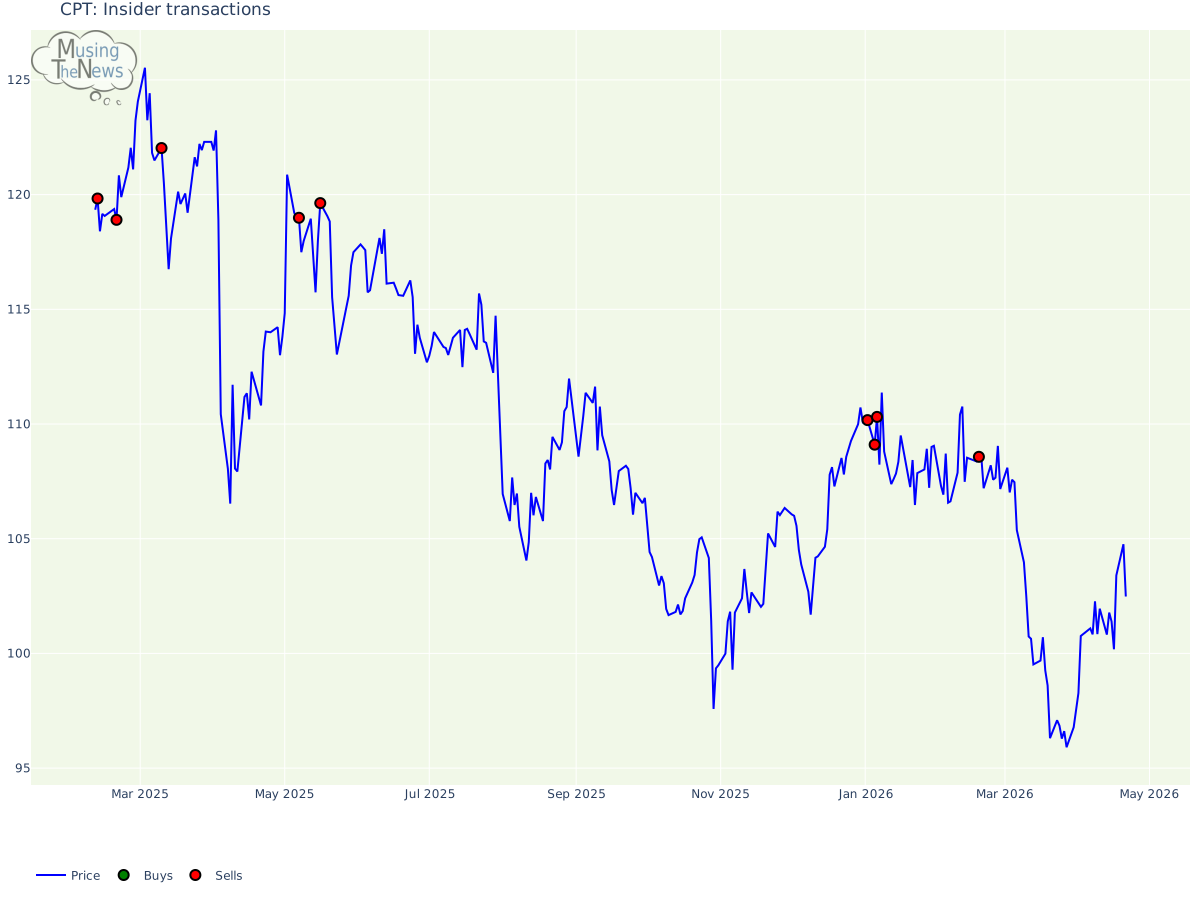
In recent market activity, 9 sales of CPT shares took place, with market price at 115.28111012776692.During the period under review, no sell transactions were recorded.The trend of more buys than sells at CPT's current price levels suggests a possible bullish sentiment. This could indicate that investors are expecting a favorable outlook for the stock, prompting more buying activity.
Recommendation changes over time:
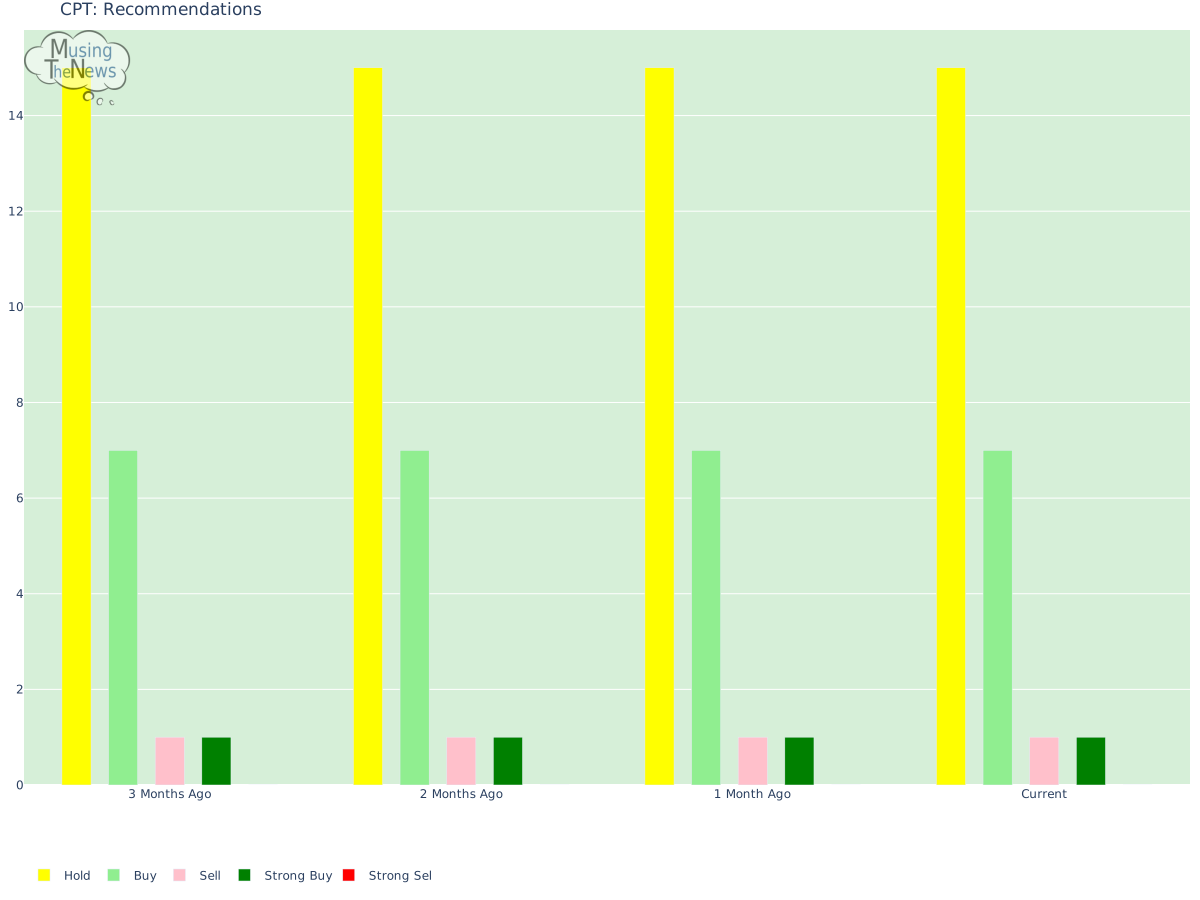
Analysts' buy bias toward Camden Property Trust suggests the stock is seen as a solid investment, potentially motivating investors to consider it for their portfolios. With this positive outlook, Camden Property Trust is likely to be viewed as a secure place to allocate funds, driving further interest in the stock.
DISCLAIMER: We provide information and our musings based on events, but nothing on this site can be considered professional advice of any kind.
If you have enjoyed reading, spread the word:
Good prospects:
Companies with the best and the worst technicals.
Latest Regulatory Filings for SP5
Companies with the best and the worst fundamentals.

AI Data Centers Transform Small-Town USA: Jobs, Taxes, and Tech Ecosystems Explode
The $919 Billion Warning: What the Wholesale Inventory Explosion Really Means for Main Street
How U.S. Cities Are Turning Data and Infrastructure into Billion-Dollar Opportunities