More about Timken India Limited
Fundamentals for Timken India Limited
Regulatory Filings for Timken India Limited

Apollo FY26: When Healthcare Becomes a Flywheel
NITI Blueprint Could Turn Brain Drain Into $135Bn Engine
RAINMUMBAI Turns Rain Into a Financial Asset

India’s IT Sector Faces a Historic Breaking Point
Fundamentals for Timken India Limited



Business Operations:
Sector: IndustrialsIndustry: Tools & Accessories
Timken India Limited manufactures and distributes tapered roller bearings, other roller bearings, components, and accessories for the automotive sector and railway industry in India, the United States, and internationally. The company offers cylindrical roller, plain, spherical roller, tapered roller, thrust, precision, slewing, and ball bearing, as well as seals, maintenance tools, housed units, and wheel hub under the Timken brand; and integrated bearing assemblies, driveline center support bearings for commercial and light vehicles, and lubrication and lubrication systems. It provides mechanical power transmission products, such as encoders, gear boxes/transmissions, couplings and joints, belts, augers, linear motion products, brakes and clutches, commercial vehicles wheels and accessories and tools, and chains. In addition, the company offers maintenance contract and refurbishment services; and uptower and motor repair services. Timken India Limited was formerly known as Tata Timken Limited and changed its name to Timken India Limited in July 1999. The company was incorporated in 1987 and is based in Bengaluru, India. Timken India Limited operates as a subsidiary of The Timken Company.
Revenue projections:
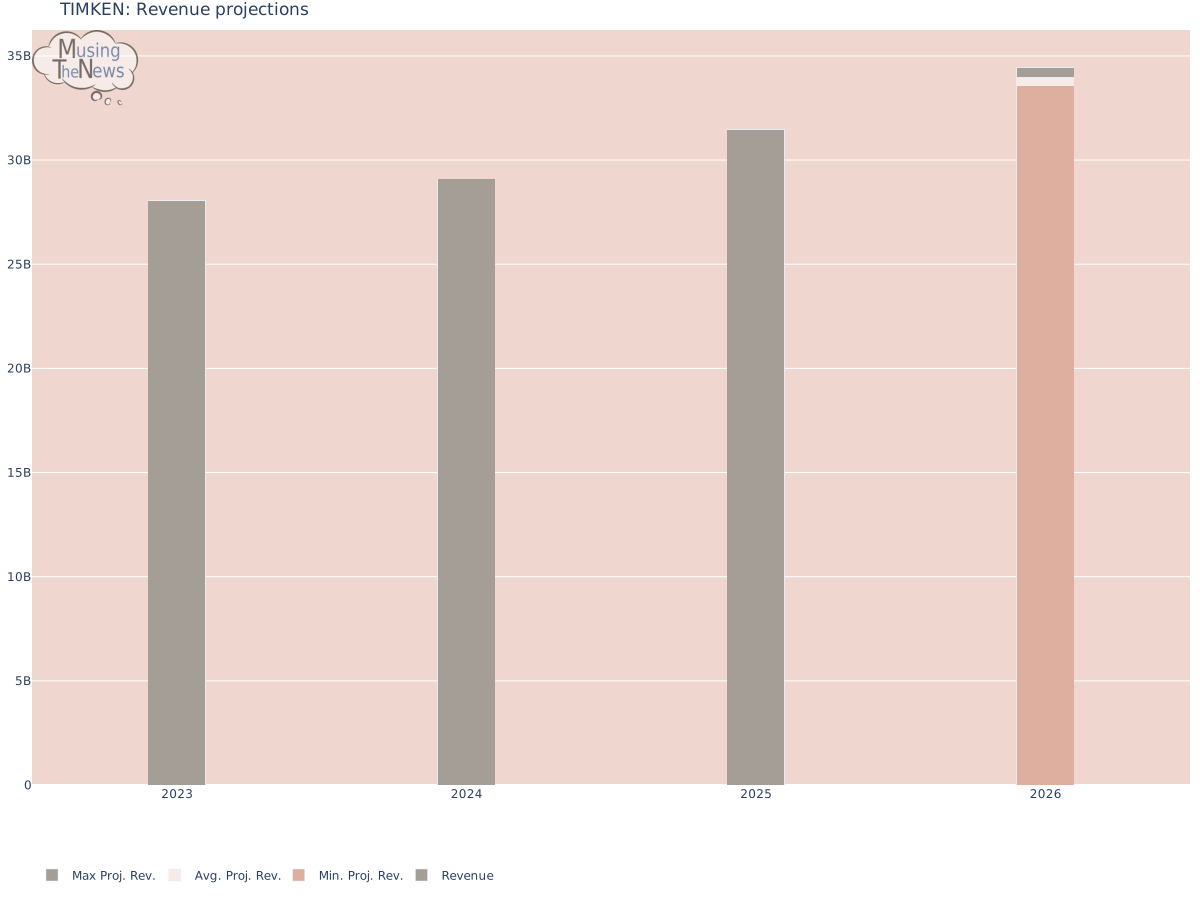
Timken India Limited's revenue projections indicate a decrease from the prior year, which may make investors hesitant. A revenue decline could harm the company's bottom line, prompting investors to be more careful, as lower earnings often signal potential issues with profitability and future performance.
Financial Ratios:
| currentRatio | 2.96600 |
|---|---|
| forwardPE | 43.30409 |
| debtToEquity | 0.50000 |
| earningsGrowth | -0.15300 |
| revenueGrowth | 0.16000 |
| grossMargins | 0.38840 |
| operatingMargins | 0.19469 |
| trailingEps | 55.15000 |
| forwardEps | 83.98514 |
TIMKEN's current ratio of 2.966 highlights the company's solid liquidity, indicating that it can easily service its short-term debt. TIMKEN's ample cash reserves and current assets ensure that the company is well-positioned to meet its immediate financial liabilities.
With both earnings and revenue growth in low territory, TIMKEN is likely to see shrinking profits. This signals a possible downturn in the company's financial health and may raise concerns about its future profitability.
TIMKEN's negative gross and operating margins indicate that the company is not generating profit from either production or day-to-day operations. This could suggest cost overruns or declining revenue, impacting its financial stability.
TIMKEN's forward EPS surpassing its trailing EPS signals projected growth in profitability, with the company expected to perform better this year. This forecast suggests that TIMKEN's earnings will improve compared to the previous financial year, highlighting optimism in its financial outlook.
Price projections:
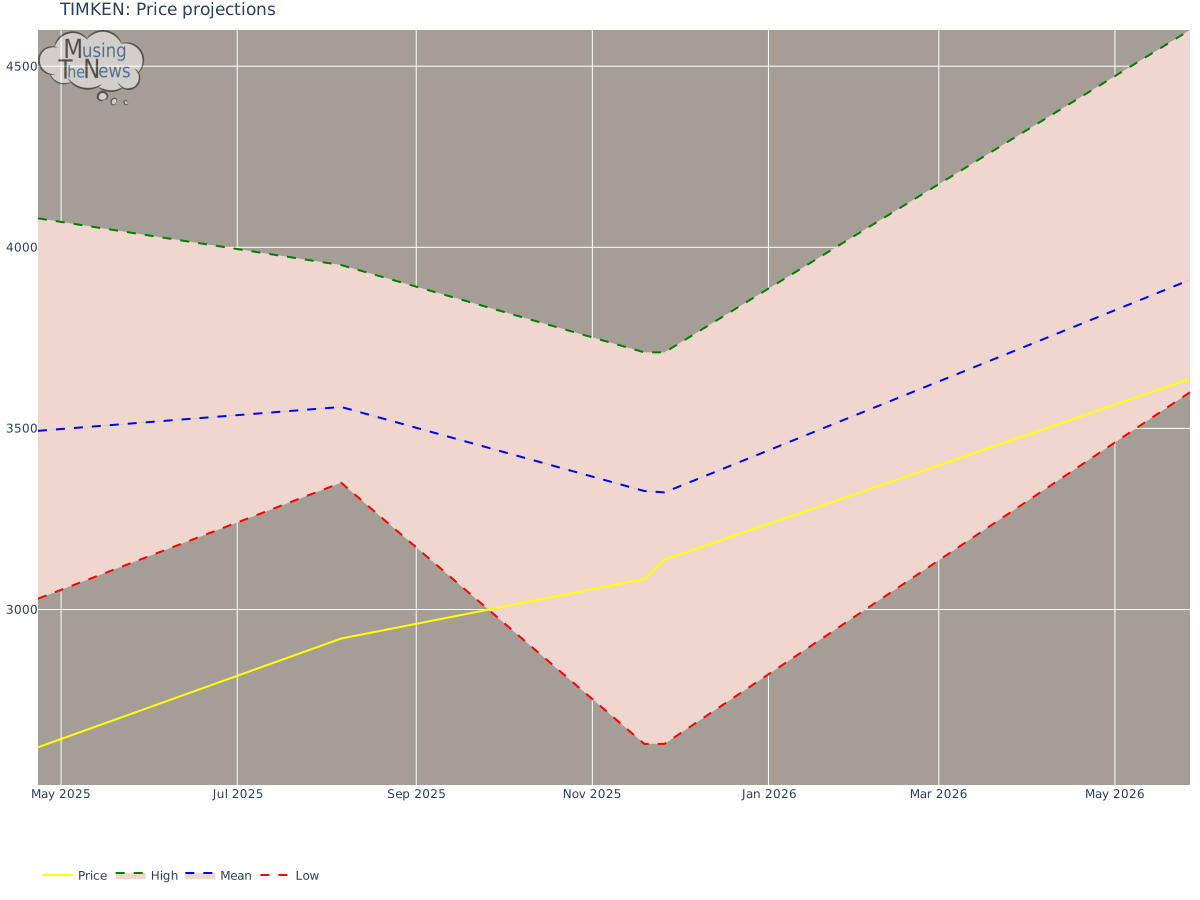
Over time, price projections for TIMKEN have gradually risen, signaling growing optimism about the company's future. This upward revision reflects increasing confidence in TIMKEN's ability to achieve strong financial results.
Recommendation changes over time:
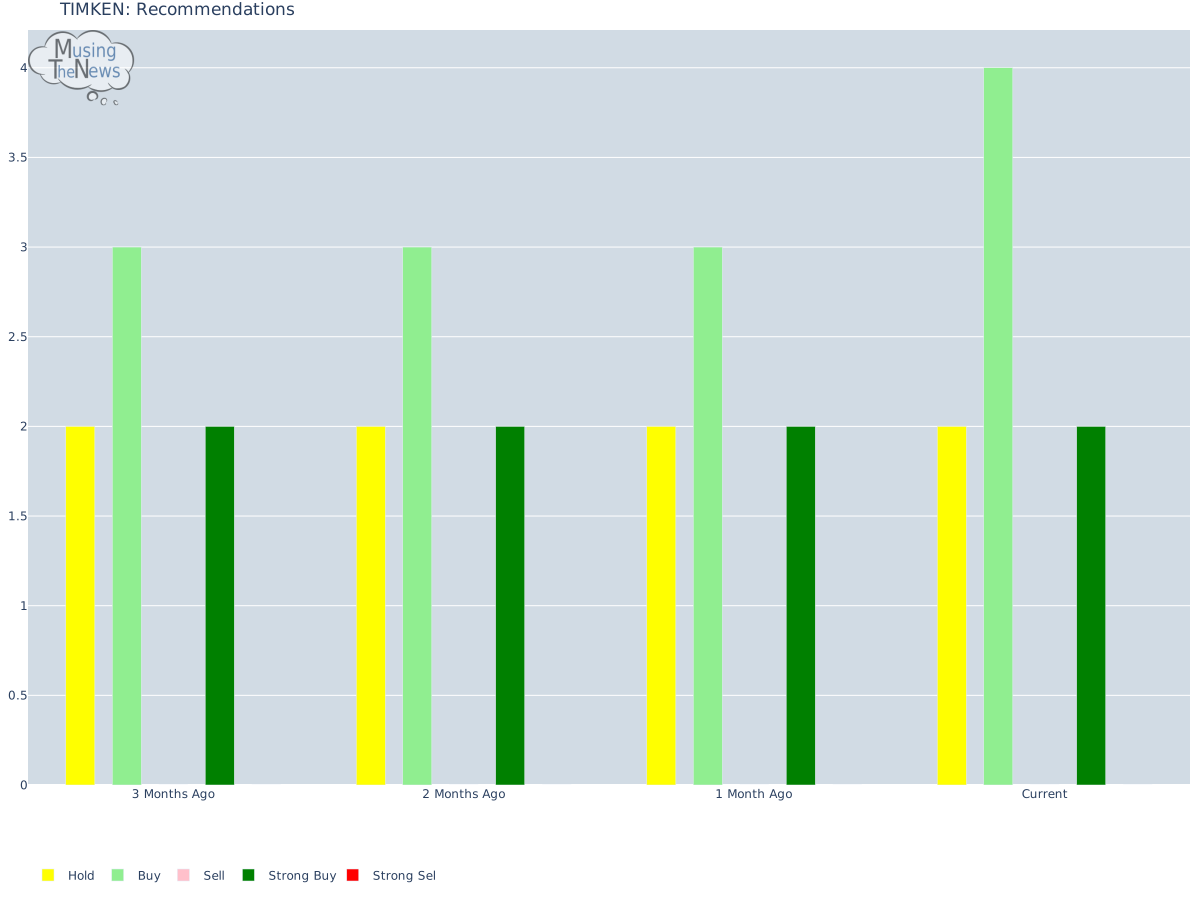
Analysts' recent buy bias toward Timken India Limited suggests the stock is gaining favor as a strong investment choice. This optimism could drive more investors to see Timken India Limited as a smart place to invest, further bolstering confidence in the company's long-term growth and potential returns.
If you have enjoyed reading, spread the word:
Good prospects:
Companies with the best and the worst fundamentals.
Latest Regulatory Filings for NSE500
Companies with the best and the worst technicals.

How Independent Directors Failed Rs 2,500 Crore in Value
India’s Stock Market May Be Sitting on a Trap

Beyond Sugar: India's Bio-Economy Bets Big on Biofuel