
More about State Bank of India
Fundamentals for State Bank of India
Regulatory Filings for State Bank of India

Apollo FY26: When Healthcare Becomes a Flywheel
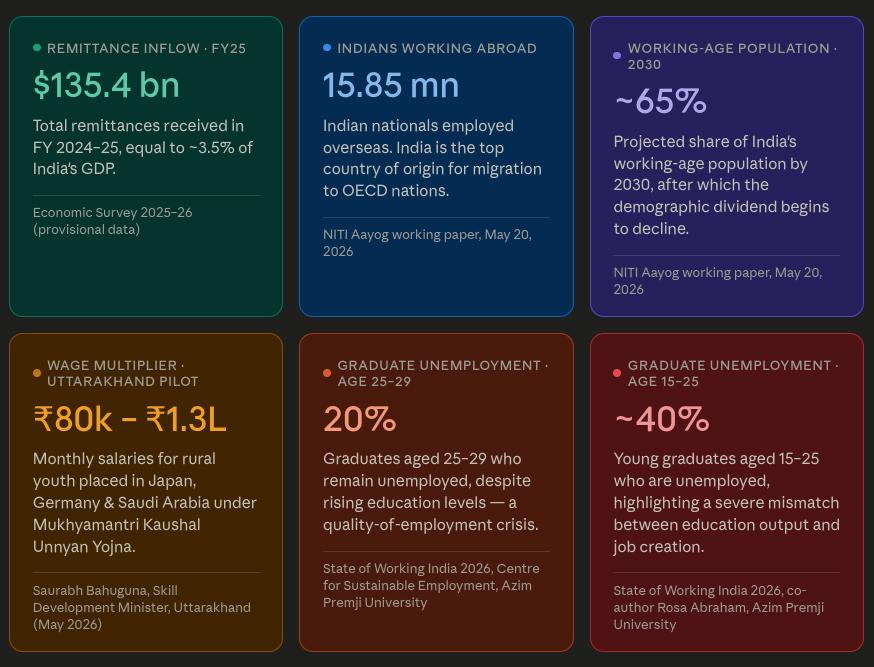
NITI Blueprint Could Turn Brain Drain Into $135Bn Engine
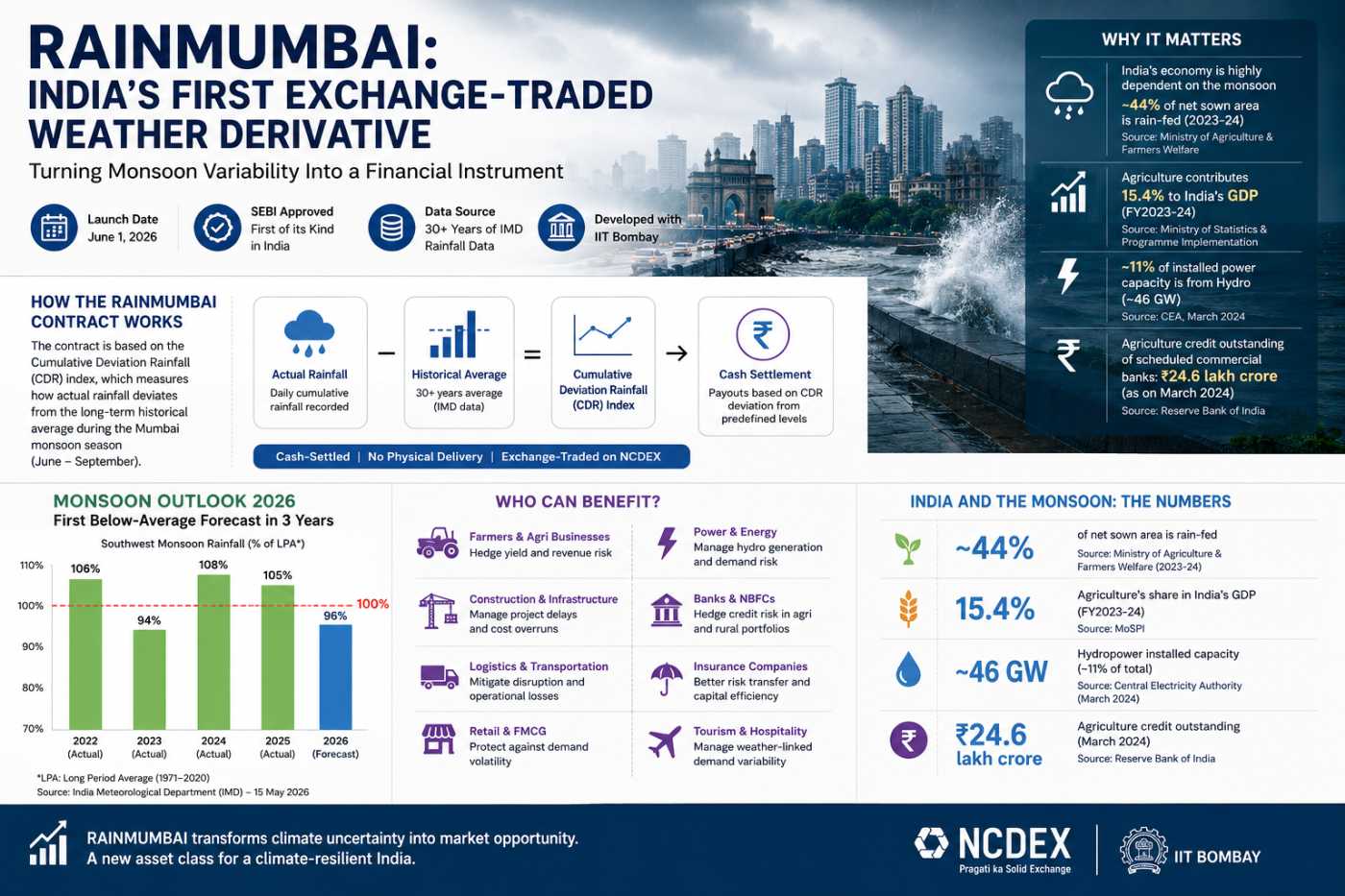
RAINMUMBAI Turns Rain Into a Financial Asset

India’s IT Sector Faces a Historic Breaking Point
Fundamentals for State Bank of India



Business Operations:
Sector: Financial ServicesIndustry: Banks - Regional
State Bank of India provides banking products and services to individuals, commercial enterprises, corporates, public bodies, and institutional customers in India and internationally. The company operates through Treasury, Corporate/Wholesale Banking, Retail Banking, Insurance Business, and Other Banking Business segments. It offers personal banking products and services, including current accounts, savings accounts, salary accounts, and fixed and recurring deposits; home, personal, auto, education, and gold loans, as well as loans against insurance policies, property, and securities; overdrafts; mutual funds, insurance, equity trading, portfolio investment schemes, remittance services; digital lending; and mobile, internet, and digital banking services. The company also provides corporate banking products and services comprising corporate accounts, working capital and project finance, deferred payment guarantees, corporate term loans, structured finance, dealer and channel financing, equipment leasing, loan syndication, construction equipment loans, financing Indian firms' overseas subsidiaries or JVs, and cash management, as well as trade and service products. In addition, it offers NRI services, including accounts and deposits, remittances, investments, and loans; agricultural banking services; supply chain finance, and deposits and transaction banking services for SME customers; and international banking services. Further, the company provides life and general insurance; estate planning services; and merchant banking, advisory, securities broking, business & management consultancy, trusteeship service, factoring, payment solution, asset management, investment management, credit cards, and custody and fund accounting services. The company was founded in 1806 and is headquartered in Mumbai, India.
Revenue projections:
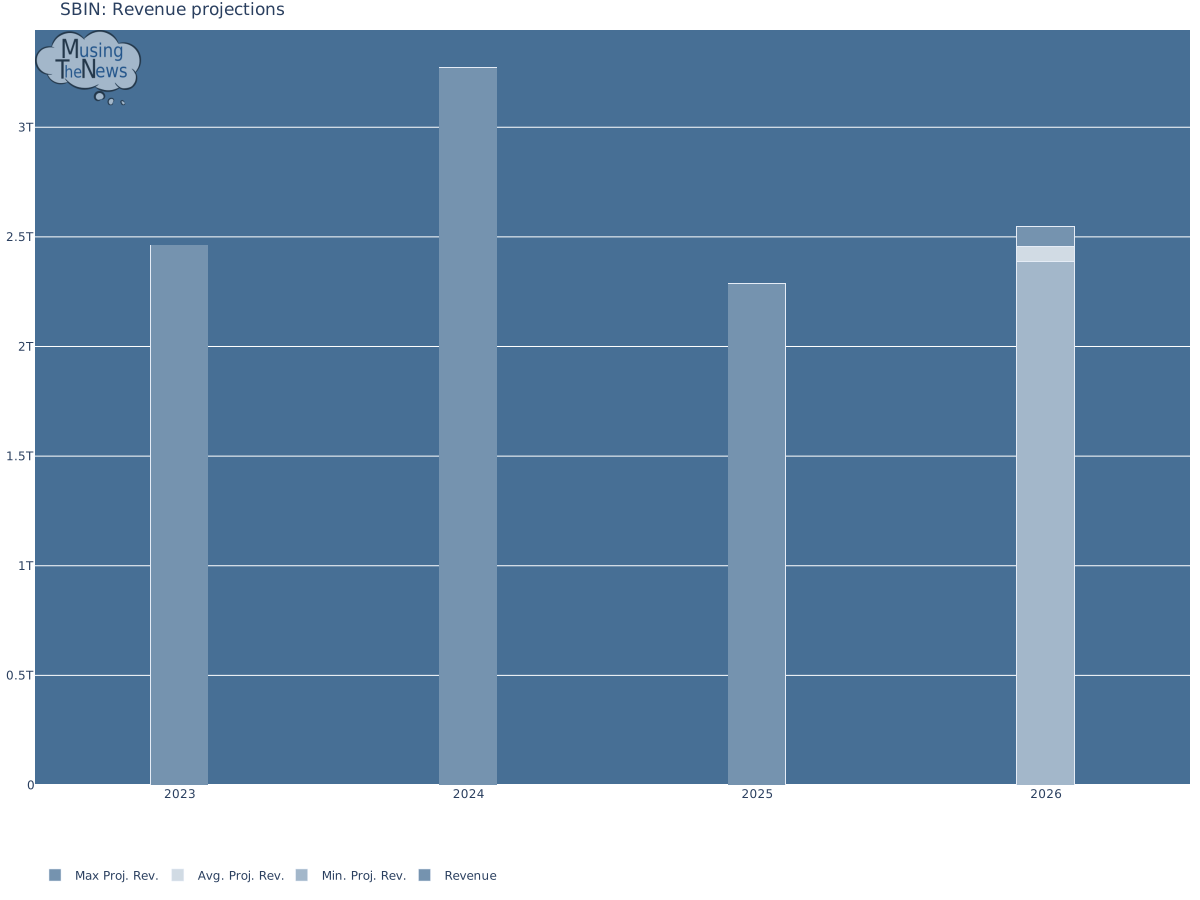
SBIN's projected revenue decline from last year is likely to make investors cautious. Lower revenues often hurt a company's bottom line, leading investors to be concerned about the company's ability to maintain profitability and deliver strong financial results in the future.
Financial Ratios:
| currentRatio | 0.000000 |
|---|---|
| forwardPE | 9.480947 |
| debtToEquity | 0.000000 |
| earningsGrowth | -0.031000 |
| revenueGrowth | 0.038000 |
| grossMargins | 0.000000 |
| operatingMargins | 0.267540 |
| trailingEps | 91.140000 |
| forwardEps | 102.078400 |
SBIN's low earnings and revenue growth suggest that the company may face shrinking profits. This could indicate underlying financial challenges, making it difficult for SBIN to sustain its current profitability.
SBIN's negative gross and operating margins highlight potential financial struggles, as the company is not covering its production or operational expenses. This could lead to broader concerns about its ability to achieve profitability.
SBIN's forward EPS is greater than its trailing EPS, indicating that the company is expected to deliver higher profitability this year. This suggests that SBIN is projected to improve its earnings, reflecting positive growth compared to last year's financial performance.
Price projections:
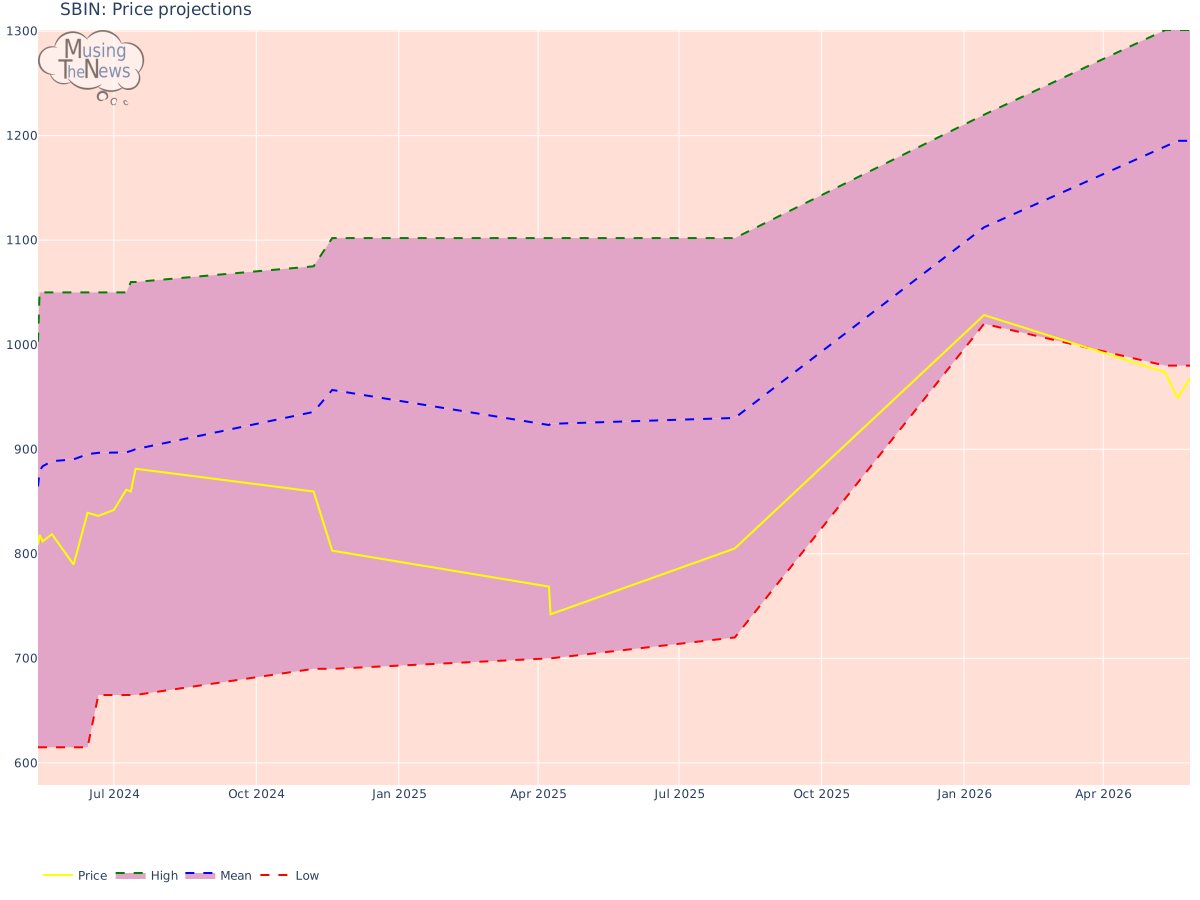
SBIN's price has consistently hovered around the lower limit of price projections. This pattern suggests that the stock may be underperforming relative to expectations, which could lead to concerns among investors.
Recommendation changes over time:
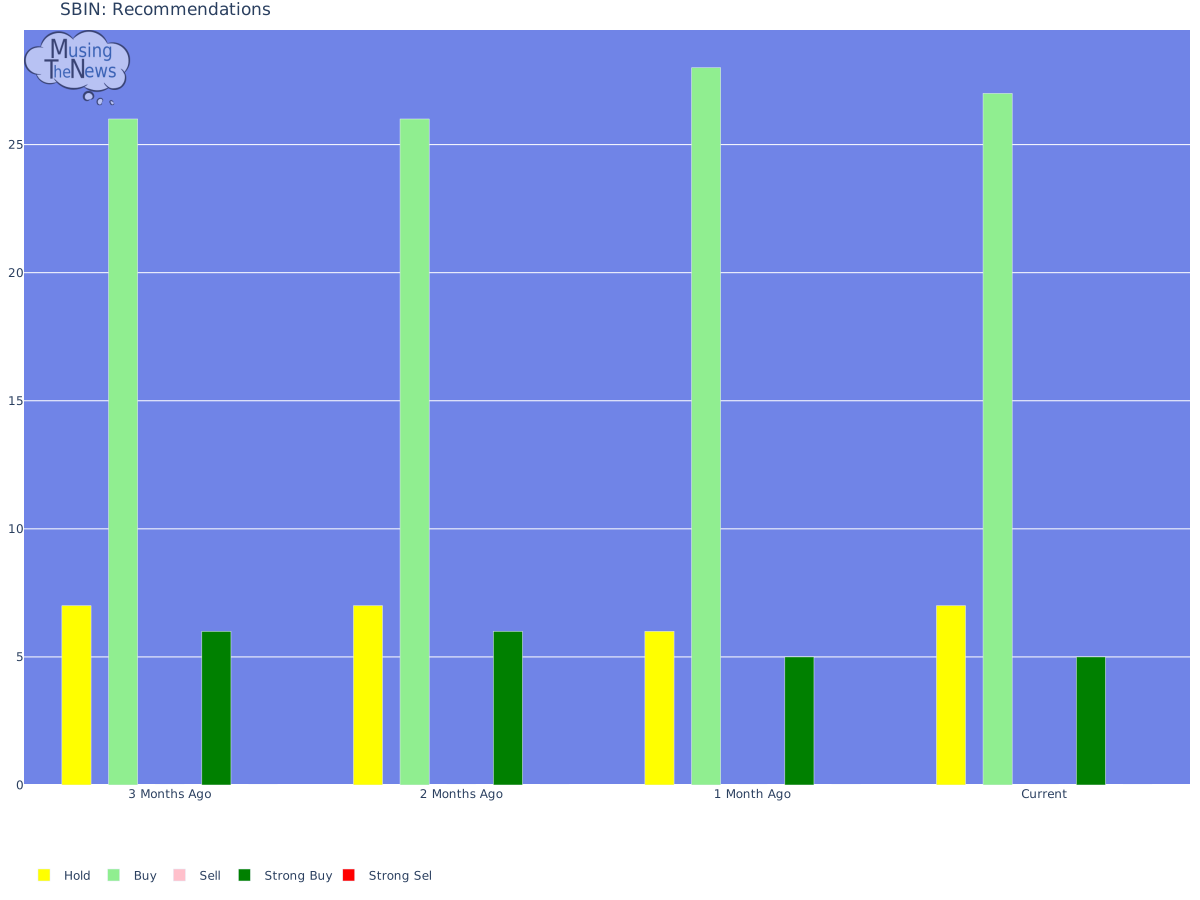
Analysts have maintained a buy bias for SBIN, which could prompt investors to consider the stock as a viable investment. With this positive outlook, SBIN is positioned as an attractive option for those looking to park their money in a stable and potentially lucrative company.
If you have enjoyed reading, spread the word:
Good prospects:
Companies with the best and the worst fundamentals.
Latest Regulatory Filings for NSE500
Companies with the best and the worst technicals.

How Independent Directors Failed Rs 2,500 Crore in Value
India’s Stock Market May Be Sitting on a Trap

Beyond Sugar: India's Bio-Economy Bets Big on Biofuel