
More about Aurobindo Pharma Limited
Fundamentals for Aurobindo Pharma Limited
Regulatory Filings for Aurobindo Pharma Limited

Why Oman Is Now India's Most Strategic Trade Partner

Infrastructure Bet Fuels Cement Surge

Apollo FY26: When Healthcare Becomes a Flywheel
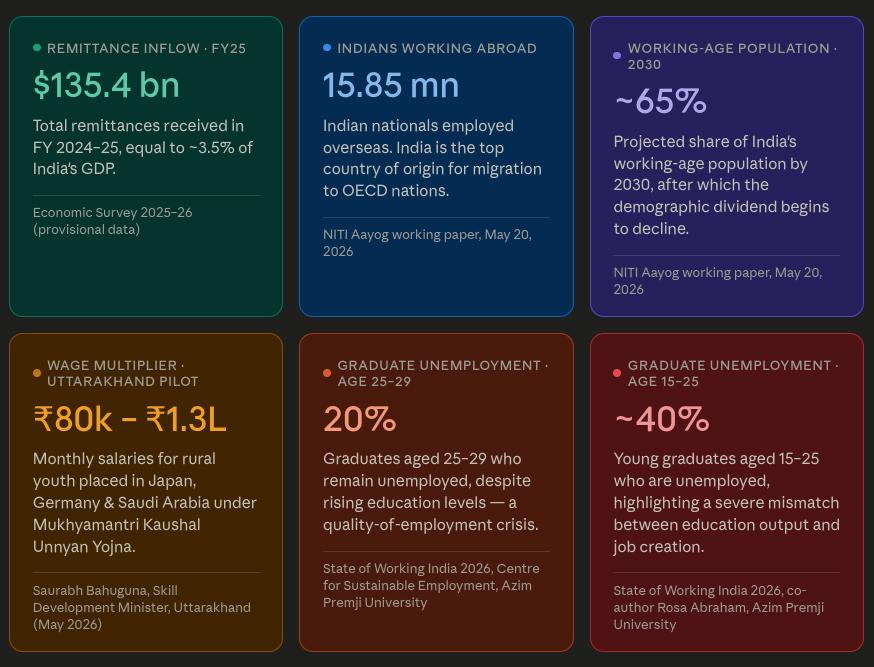
NITI Blueprint Could Turn Brain Drain Into $135Bn Engine
Fundamentals for Aurobindo Pharma Limited



Business Operations:
Sector: HealthcareIndustry: Drug Manufacturers - Specialty & Generic
Aurobindo Pharma Limited, a biopharmaceutical company, engages in the manufacture of generic formulations and active pharmaceutical ingredients in India, the United States of America, Europe, Puerto Rico, and internationally. The company offers formulation in form of oral solids, liquids, injectables, and vaccines, as well as over-the-counter drugs; and active pharmaceutical ingredients (APIs), biosimilars, biocatalysts, peptides, and hormones targeting key therapeutic areas, including central nervous system, cardiovascular, respiratory, antibiotics, anti-retroviral, anti-diabetics, gastroenterology, oncology, and dermatology. It also provides antiretroviral drugs for the people and children living with HIV; and provides project-based chemistry contract services that cover the clinical stage through to manufacturing and management of the entire drug lifecycle in the API space for sterile and non-sterile penicillin's, cephalosporins, penems, and non-beta lactams. The company was incorporated in 1986 and is headquartered in Hyderabad, India.
Revenue projections:

AUROPHARMA is projected to experience a revenue decline compared to last year, a development that often leads to investor caution. The drop could negatively impact the company's bottom line, as lower revenues typically signal reduced profitability, prompting more conservative investment strategies.
Financial Ratios:
| currentRatio | 1.81300 |
|---|---|
| forwardPE | 16.14220 |
| debtToEquity | 21.31000 |
| earningsGrowth | 0.01900 |
| revenueGrowth | 0.05600 |
| grossMargins | 0.59919 |
| operatingMargins | 0.14936 |
| trailingEps | 60.36000 |
| forwardEps | 88.53811 |
AUROPHARMA's current ratio being 1.813 suggests the company will have no issues paying off its short-term debt. With sufficient cash reserves and current assets, AUROPHARMA can easily cover its immediate liabilities, reflecting solid financial health.
AUROPHARMA's Forward PE is well-positioned, indicating the stock price is favorable compared to its earnings. This suggests the stock is not overpriced and offers room for growth, making it an attractive option for investors looking for future value appreciation.
Aurobindo Pharma Limited's low Debt-to-Equity ratio indicates that the company isn't over-leveraged, suggesting it maintains a healthy balance between debt and equity. This lowers financial risk and points to a stable financial foundation, reassuring investors of the company's financial health.
Aurobindo Pharma Limited's negative gross and operating margins signal that the company is not profitable, struggling to cover costs associated with production and operations. This could be a red flag for its financial performance moving forward.
AUROPHARMA's forward EPS is higher than its trailing EPS, suggesting the company is expected to see an increase in profitability this year. This points to positive growth, indicating that AUROPHARMA is projected to improve its financial performance compared to the previous year.
Price projections:

The price of AUROPHARMA has consistently remained close to the lower end of price projections. This trend may reflect uncertainty in the market regarding the company's ability to deliver on growth expectations.
Recommendation changes over time:

The analysts' recent buy bias for Aurobindo Pharma Limited indicates strong confidence in the stock's future performance. This could encourage more investors to view Aurobindo Pharma Limited as a worthwhile investment, positioning the company as a top choice for those seeking financial security and long-term growth opportunities.
If you have enjoyed reading, spread the word:
Good prospects:
Companies with the best and the worst fundamentals.
Latest Regulatory Filings for NSE500
Companies with the best and the worst technicals.

RAINMUMBAI Turns Rain Into a Financial Asset

India’s IT Sector Faces a Historic Breaking Point

How Independent Directors Failed Rs 2,500 Crore in Value